Standard for Sustainable Rice Cultivation v3.0
Transition to the SRP Standard and SRP Performance Indicators v3.0
About the Revision of the SRP Standard for Sustainable Rice Cultivation and Performance Indicators
The Sustainable Rice Platform has completed the technical revision of the SRP Standard for Sustainable Rice Cultivation Version 2.2, resulting in Version 3.0, which was endorsed by the SRP Board in May 2026. SRP is now preparing the revised Standard and associated Performance Indicators, assurance requirements and implementation resources for publication and transition. This revision is being conducted with reference to the ISEAL Code of Good Practice for Sustainability System, ensuring that our standards remain robust, credible, and aligned with global best practices.
The revision of SRP Standard for Sustainable Rice Cultivation, currently version 2.2 into version 3.0, aims to integrate the latest scientific advancements, address ambiguities, enhance auditability, and strengthen focus on social factors like gender empowerment. It seeks to align with updated regulations, simplify data collection, and provide a modular structure for partners. The revision reflects stakeholder demand for a sustainability standard that supports market-based solutions and informs national policy while addressing global commitments like the UN Sustainable Development Goals.
Objectives:
- Enhance Alignment with Evolving Policies and Regulations: Ensure the standard remains responsive to the changing global policy and regulatory landscape.
- Strengthen Gender and Women’s Empowerment: Expand the standard’s focus to better address gender equality and women’s empowerment in sustainable rice cultivation.
- Incorporate Stakeholder Perspectives: Integrate insights and experiences from all relevant stakeholders to create a more inclusive and representative standard.
- Encourage Broader Stakeholder Engagement: Foster greater participation, acceptance, and recognition of the standard across diverse stakeholder groups.
- Maintain Consistency with SRP Normative Guidance: Ensure the standard aligns with other SRP frameworks for a cohesive approach.
- Facilitate Future Integration of Carbon and Ecosystem Services: Structure the standard to allow flexible integration of future modules, such as carbon benefits and ecosystem services, into the SRP Assurance Scheme.
Standard Revision Thematic Focuses
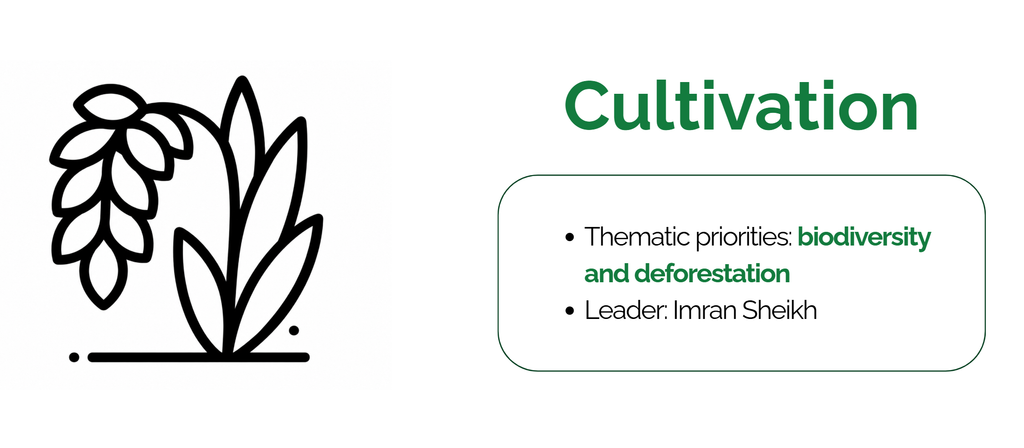
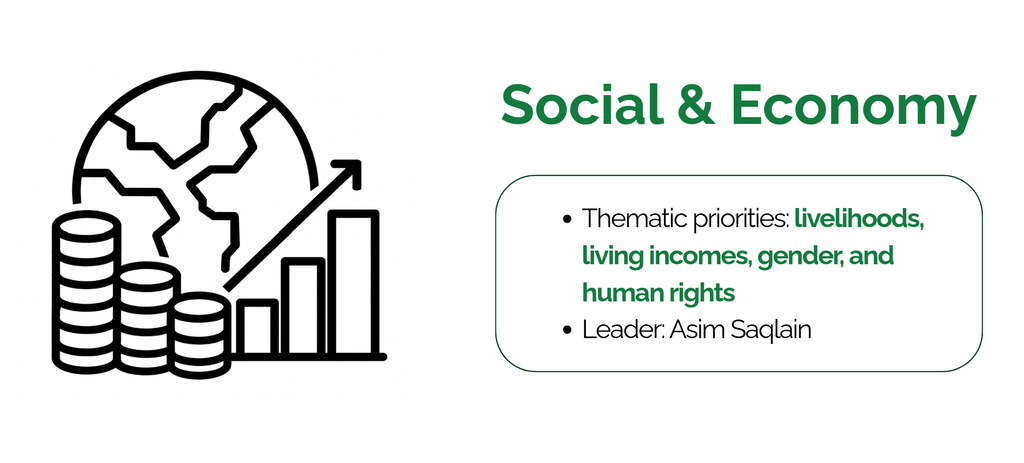
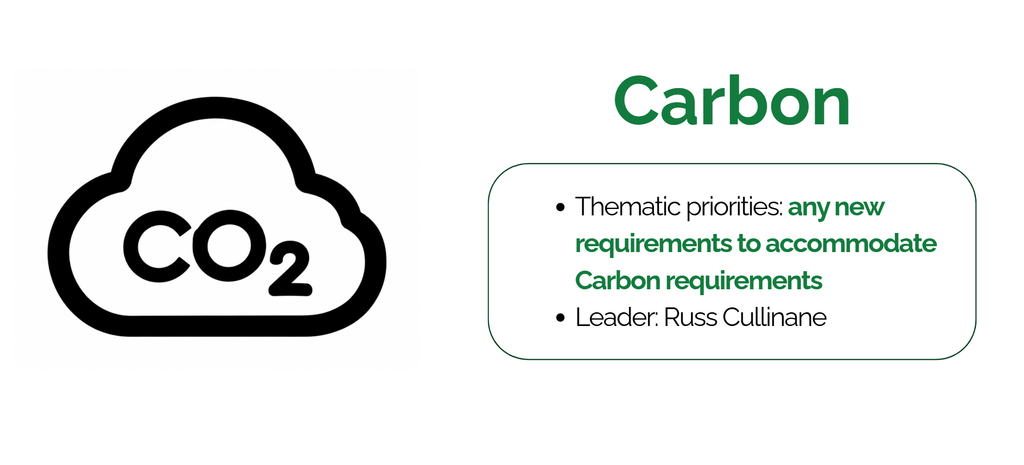
The revision of the SRP Standard is being guided by three dedicated Working Groups (WGs), each focusing on key thematic areas crucial to sustainable rice cultivation. These groups bring together experts, stakeholders, and practitioners from across the rice value chain to ensure a holistic and inclusive revision process.
Current Progress – Preparing for Transition
Following endorsement of the SRP Standard for Sustainable Rice Cultivation Version 3.0 by the SRP Board in May 2026, SRP has moved from the technical revision phase into implementation readiness and transition planning.
During this phase, SRP is preparing the supporting framework needed to enable producers, producer groups, auditors, trainers, Conformity Assessment Bodies (CABs), implementing partners and other stakeholders to understand and progressively adopt Version 3.0.
Current activities include:
- finalizing the revised SRP Performance Indicators and associated normative and assurance documents;
- developing implementation guidance, training modules and supporting materials for producers, producer groups, auditors, trainers and other users;
- aligning the SRP Assurance Scheme and verification requirements with the revised Standard;
- preparing auditor, CAB and trainer calibration to support consistent interpretation and implementation;
- updating relevant SRP systems, tools and data requirements to support Version 3.0;
- developing stakeholder communication and awareness materials explaining the main changes and what they mean for different stakeholder groups; and
- preparing the 12-month transition pathway from January to December 2027, ahead of mandatory implementation of Version 3.0 from January 2028.
Stakeholder Engagement Snapshot
- More than 150 stakeholders and experts engaged throughout the revision process
- 49 participants involved in Working Groups and Technical Committee discussions
- More than 100 public consultation responses received across two consultation rounds
- Field testing and farmer consultations conducted with 3 farmer groups in Indonesia
- Independent peer review conducted by 4 IRRI scientists and experts
SRP would like to express its sincere appreciation to all individuals and organizations who contributed to the revision process, including members of the SRP Board and Technical Committee, Working Group participants, farmers, auditors, researchers, civil society organizations, public sector representatives, private sector actors, external experts, and scientists from the International Rice Research Institute (IRRI). Their technical expertise, practical insights, and constructive feedback played an important role in strengthening the revised Standard and supporting its relevance across diverse rice production contexts. SRP will continue to share updates as the rollout and transition process progresses.
Performance Indicators: Measuring the Outcomes of Sustainable Rice Production
Alongside the Standard, SRP is finalizing the revised Performance Indicators (PIs) to strengthen the monitoring of sustainability performance and outcomes while improving the clarity, consistency and practicality of data collection.
The PIs complement the SRP Standard for Sustainable Rice Cultivation by providing a common framework for monitoring changes in the economic, environmental and social performance of rice production. While the Standard defines the practices and management systems expected to support sustainable rice production, the PIs help track changes in sustainability performance and selected outcomes over time.
Together, the Standard and PIs enable SRP stakeholders to look beyond implementation of practices alone and better understand progress towards sustainability outcomes.
What is changing?
Two indicators are receiving particular attention:
Profitability
SRP is revising the Profitability Performance Indicator to improve the consistency and usefulness of information on the economic performance of rice production.
The revision aims to clarify the data needed to assess production costs, revenues and profitability, while taking into account the practical realities of collecting reliable economic data at farm level.
The revised indicator will also strengthen SRP’s understanding of the economic dimension of sustainable rice production and provide information relevant to broader discussions around farmer livelihoods and economic resilience. Profitability, however, is distinct from living income and should not be interpreted as a living-income assessment.
Greenhouse Gas Emissions
SRP is strengthening the Greenhouse Gas (GHG) Performance Indicator in response to the growing need for consistent information on GHG emissions associated with rice cultivation, while recognizing differences in data availability and technical capacity across SRP programmes.
The revised approach introduces progressive levels of measurement, from documenting relevant practices and activity data, through estimating defined GHG emission sources, to monitoring changes over time against an established baseline where sufficient data and technical capacity are available.
The approach is intended to provide a consistent framework for monitoring farm-level GHG performance while remaining practical for programmes at different stages of measurement capacity. Supporting methodological guidance will define the emission sources, data requirements, calculation methods and quality considerations applicable at each level.
The GHG Performance Indicator focuses on defined emission sources within the scope of the indicator. It is not intended to provide a complete product carbon footprint or comprehensive GHG inventory across the rice value chain, or to serve on its own as verification of an emission-reduction claim.
Connecting practices and outcomes
Version 3.0 aims to strengthen the connection between Standard requirements, Performance Indicators and sustainability outcomes.
The Standard establishes the practices and management requirements expected from producers and Producer Groups, while the PIs provide a consistent framework for monitoring sustainability performance and selected outcomes over time.
This supports continuous improvement and provides producers, implementing partners, researchers and value-chain actors with information to better understand progress and identify areas where further improvement may be needed.
Coming in 2027: The revised Performance Indicators and supporting methodological guidance will be published alongside the Version 3.0 implementation resources.
Transition to v3.0
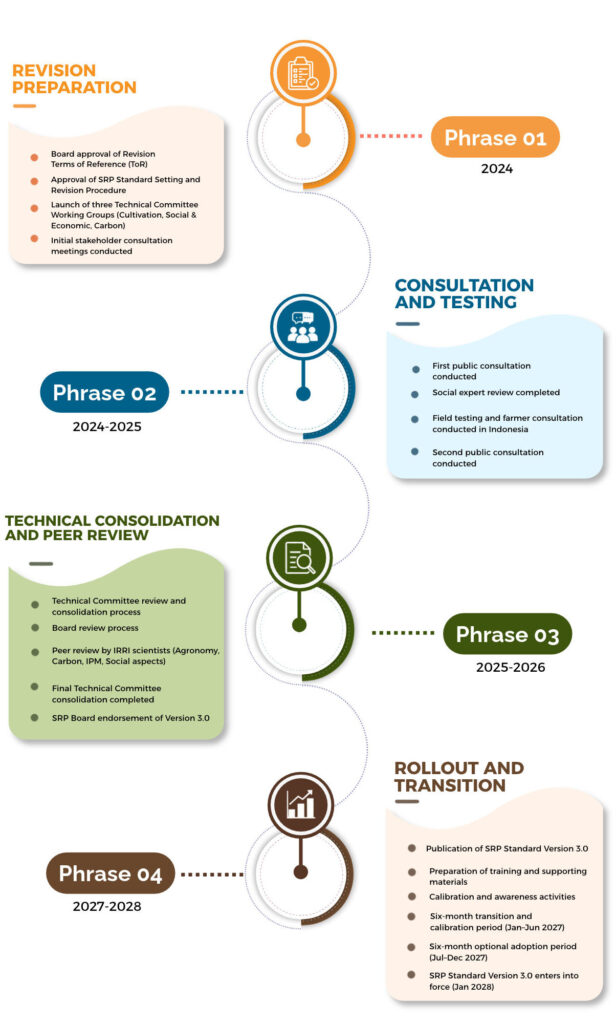
During the 12-month transition period (January–December 2027), SRP will support stakeholders in preparing for Version 3.0 through guidance, training, calibration, and system updates. From July 2027, producers and producer groups may voluntarily adopt Version 3.0 for verification, while Version 2.2 will remain available during the transition period. Version 3.0 will become mandatory for all applicable verification and annual audits from January 2028.
| January 2027 | Publication of SRP Standard Version 3.0 and supporting documents |
| January–December 2027 | 12-month transition period |
| Jan–Jun 2027 | Preparation, capacity building, calibration and system readiness |
| Jul–Dec 2027 | Optional adoption of Version 3.0 alongside Version 2.2 |
| January 2028 | Version 3.0 mandatory for verification and annual audits |
SRP Standard Revision Journey (2024 – 2028)
What should stakeholders expect during the transition?
Producers and Producer Groups
No immediate change is required before Version 3.0 is published. During 2027, SRP will provide guidance and capacity-building materials to support understanding of the revised requirements and preparation for implementation.
Conformity Assessment Bodies and Auditors
SRP will provide updated assurance requirements, interpretation guidance and calibration activities before mandatory implementation.
Authorized Training Providers and Trainers
Updated training materials and guidance will be made available to support consistent delivery of Version 3.0.
Implementing Partners and SRP Members
Partners are encouraged to use the transition period to assess the implications of Version 3.0 for existing projects, farmer support systems, data collection and implementation plans.
SRP Standard v3.0 Transition Support Programme
As SRP prepares for publication and the 12-month transition period, we will roll out a series of communication, learning and capacity-building activities to help stakeholders understand and prepare for Version 3.0.
Follow the SRP Standard v3.0 series in SRP channels
From October 2026 onwards, SRP will publish a series of teasers introducing the Version 3.0, followed with webinars and stakeholder briefings. The webinars and targeted briefing sessions will be held during the transition period. These will provide opportunities for producers and Producer Groups, implementing partners, Authorized Training Providers, trainers, Conformity Assessment Bodies, auditors, members and other stakeholders to explore the changes in more detail and ask questions about implementation.
Webinar dates, registration links, recordings and supporting materials will be published on this page as they become available.
Standard for Sustainable Rice Cultivation v3.0 — Frequently Asked Questions
- About the revision
- Implementation and measurement
- Assurance, recognition and claims
- Publication and transition
Why is SRP revising the Standard?
The revision draws on experience applying the current Standard, stakeholder input and new technical knowledge. It aims to make requirements clearer, more practical to implement and easier to assess, while strengthening the links between farming practices and sustainability outcomes.
What are the main changes in v3.0?
The draft contains 43 requirements across eight themes. It strengthens provisions on water, nutrients, pest management, biodiversity, working conditions and safety. It also introduces Mandatory Compliance Foundations for third-party assurance and a pathway recognising progress towards full verification.
Does v3.0 apply to both smallholders and large farms?
Yes. For selected requirements, the levels of compliance reflect differences in farm scale and operating context.
What are the Mandatory Compliance Foundations?
They are risk assessment, a grievance mechanism and remediation. Producers and producer groups seeking third-party assurance must meet these requirements; a higher score elsewhere cannot compensate for a missing foundation.
How does the Standard relate to the Performance Indicators?
The Standard sets out expected practices and management measures. The 12 Performance Indicators provide a framework for measuring farm-level economic, environmental and social performance over time.
Are all Performance Indicators being redesigned?
No. The v3.0 PI revision focuses on farm-level profitability from rice production and greenhouse gas emissions. The Basic, Intermediate and Advanced measurement framework remains in place.
What is an Aspiring Producer or Producer Group?
This pathway recognises progress towards full verification. Eligible producers or groups must score 50–89%, meet applicable mandatory thresholds and demonstrate continued improvement. The Progress Recognition Statement is available for up to two years; full verification must be achieved in the third year.
What is required to become SRP Verified?
A producer or group must score at least 90% and meet the essential compliance threshold for every applicable requirement, as well as the Mandatory Compliance Foundations for third-party assurance.
Can an Aspiring Producer use the SRP Verified label?
No. Progress recognition does not confer SRP Verified status or automatic permission to use SRP claims, labels or trademarks. The applicable Assurance Scheme and Brand Manual & Claims Guidelines govern their use.
When will audits move from v2.2 to v3.0?
The draft provides a 12-month transition from publication. Audits continue under v2.2 for the first six months. For the next six months, v3.0 audits are encouraged while v2.2 remains accepted. V3.0 becomes mandatory for verification and annual audits one year after publication. SRP will confirm calendar dates when publication is final.
Will an existing Verified Unit restart its verification cycle?
No. Its first v3.0 audit follows the existing audit cycle.
What should producers and producer groups do now?
Review the proposed changes, identify any gaps in practices or records, and plan training and updates to management systems. The transition period is intended to give all users time to prepare.
Technical — Frequently Asked Questions
- Scoring and applicability
- Mandatory Compliance Foundations and group responsibilities
- Aspiring Producer recognition
- Performance Indicators and GHG measurement
- Local guidance and audits
How is the overall Standard score calculated?
The points earned for applicable requirements are divided by the maximum points available for those requirements, then multiplied by 100. The result is expressed on a 0–100 scale. Where all requirements apply, the draft identifies 138 as the typical maximum available points.
Can a requirement be marked “not applicable”?
Yes, where the relevant activity or risk is absent from the production system. The reason must be documented and checked during the audit. A requirement cannot be excluded simply because it is difficult to meet; an accepted non-applicable requirement is removed from the maximum points used to calculate the score.
What happens if a producer scores 90% or more but misses an essential compliance threshold?
The score alone does not qualify the producer for SRP Verified status. The producer must also meet the essential compliance threshold for every applicable requirement and the Mandatory Compliance Foundations for third-party assurance.
What evidence is needed for the Mandatory Compliance Foundations?
Evidence should show that risks have been assessed and addressed, a documented process exists for receiving and handling grievances, and appropriate action is taken when an issue requires remediation. The records needed will depend on the operation and the issue identified. The final Standard and assurance guidance will set out the applicable assessment expectations.
Who is responsible for these foundations in a smallholder producer group?
The group’s Internal Management System (IMS) Manager is responsible for ensuring that the foundations are implemented, monitored and documented for verification. Individual producers may also need to provide information or carry out actions under the group’s procedures.
Which conditions must an Aspiring Producer or Producer Group meet?
The draft requires an overall score of 50–89% and the applicable essential compliance thresholds for designated requirements concerning biodiversity, food safety, farmer health and children’s welfare. The Mandatory Compliance Foundations also apply where third-party assurance is sought. The exact applicable thresholds must be checked against the final Standard.
What is expected in the second year of Aspiring Producer recognition?
The draft requires the producer or group to maintain or improve its overall score, continue meeting the applicable mandatory thresholds and demonstrate progress towards full verification. A Progress Recognition Statement is available for no more than two years; full verification must be achieved in the third year to continue on the verification pathway.
How are the Basic, Intermediate and Advanced PI measurement levels selected?
The levels reflect different purposes, data needs and degrees of measurement detail. Users should select the level appropriate to their monitoring objective and ability to collect reliable data, then follow the method specified for that indicator and level. A higher measurement level requires stronger supporting data; it is not a separate level of compliance with the Standard.
What is needed to report a change in greenhouse gas emissions?
A change over time needs a defined baseline and a comparison using consistent methods and boundaries. The underlying activity data, emission factors, assumptions and data quality procedures must be documented at the applicable measurement level. Users should follow the final GHG Performance Indicator methodology and any additional requirements relevant to an assured GHG claim.
Does the profitability indicator measure living income?
No. It measures the economic performance of rice production at farm level. Information on income from other sources may provide useful context, but assessing living income adequacy requires additional household data, benchmarks and methods beyond the profitability indicator.
Can National Interpretation Guidelines change the v3.0 scoring rules?
No. National Interpretation Guidelines can provide locally relevant guidance for applying the global Standard but must preserve its scoring system and minimum mandatory compliance thresholds.
What should auditors prepare for v3.0?
Auditors will need to understand the revised requirements, levels of compliance, scoring and applicability rules; assess the Mandatory Compliance Foundations; and distinguish the conditions for Aspiring Producer recognition from those for SRP Verified status. Audit tools, training and recording procedures should follow the finalized Standard and assurance guidance.
Contact us
For inquiries about the Revision of the SRP Standard for Sustainable Rice Cultivation and Performance Indicators, please reach out to us at assurance@srpglobal.org