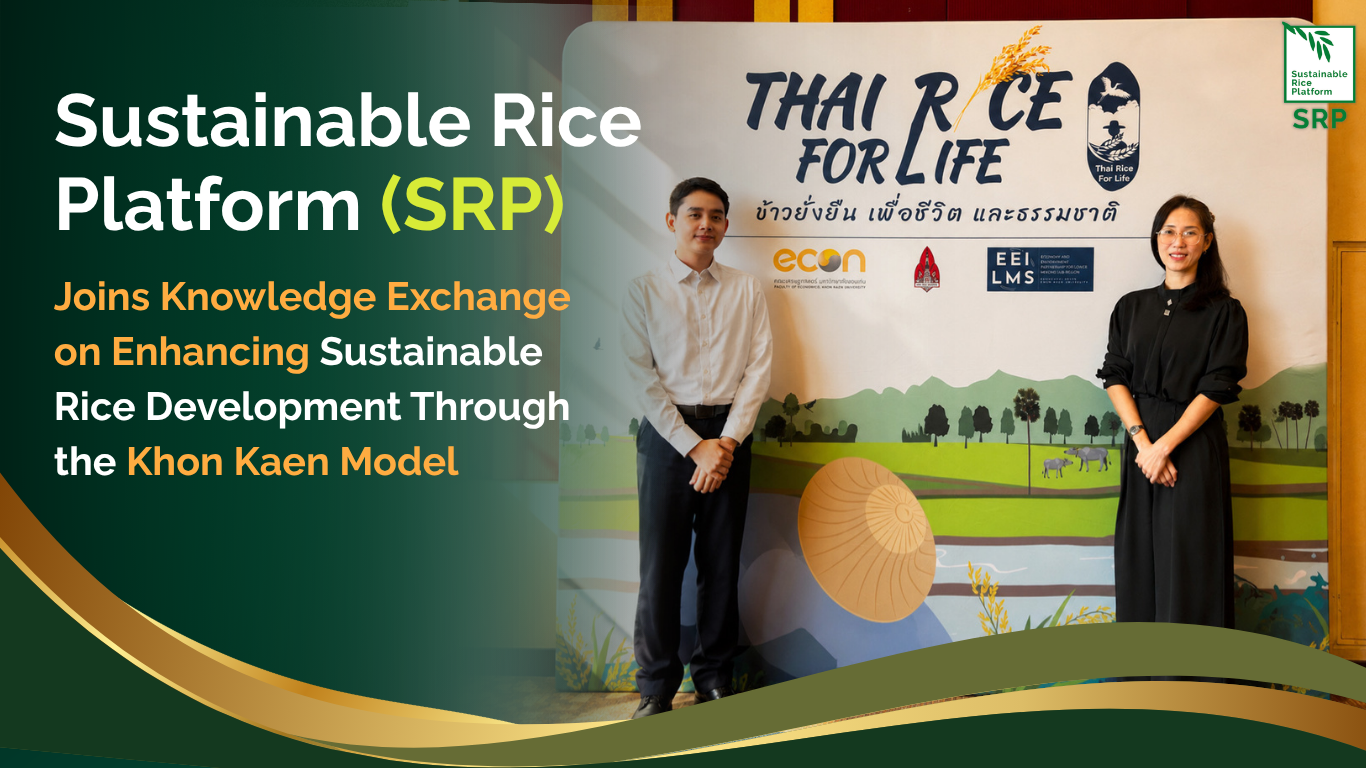
Sustainable Rice Platform (SRP) Joins Knowledge Exchange on Enhancing Sustainable Rice Development Through the Khon Kaen Model
Bangkok, Thailand – 6 May 2026
The Sustainable Rice Platform (SRP) was honored to participate in the conference on the presentation of research findings and stakeholder consultation for the project titled “Expanding the Benefits of Appropriate Technology and Related Innovation for Provincial Sustainable Rice Production through the Development of the Khon Kaen Sustainable Rice Model.” The event was held on 6 May 2026 at Centara Grand and Bangkok Convention Centre at CentralWorld, Bangkok, and was attended by Ms. Kanlak Waritwaranont, Managing Director of SRP, and Mr. Tun Boonyakongrat from the Communications and Membership Unit.
The conference brought together representatives from government agencies, academia, the private sector, and sustainability partners to discuss pathways for strengthening Thailand’s sustainable rice sector while improving farmers’ livelihoods and reducing greenhouse gas emissions. The event opened with remarks from Ms. Phawadee Chaiuea, representative of ARDA, who emphasized the importance of translating research into practical implementation and scalable impact for farming communities. ARDA reaffirmed its role in supporting applied research that can generate measurable economic, social, and environmental benefits at the provincial level.
A keynote address on “The Development of Sustainable Rice in Thailand from the Perspective of the National Bureau of Agricultural Commodity and Food Standards” was delivered by Mrs. Chanintorn Rimcharone, Deputy Director General, Department of Foreign Trade, Ministry of Commerce. Her presentation highlighted the increasing pressures facing the global rice sector, including climate change, trade protection measures, geopolitical uncertainty, and intensifying price competition from major exporting countries. She also underscored the growing importance of sustainability standards and rice markets as strategic opportunities for Thailand’s rice industry.
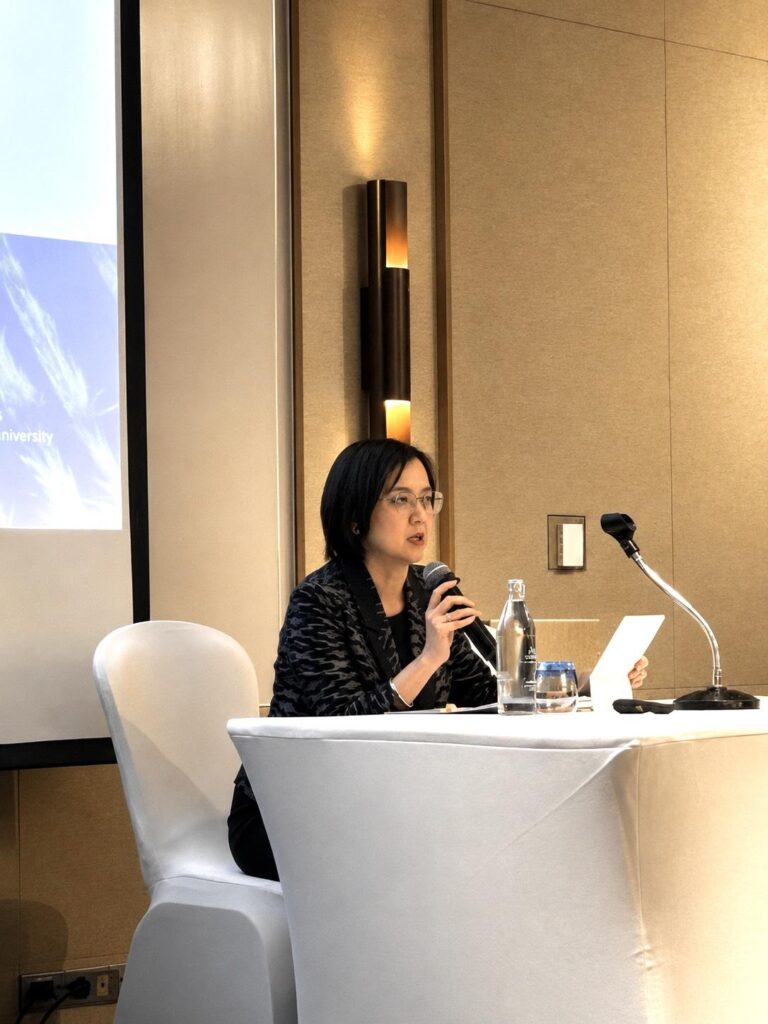
Mrs. Chanintorn Rimcharoen shared insights on the current landscape of Thailand’s rice industry, including sustainability challenges, global market dynamics, and trade-related risks affecting Thai rice exports.
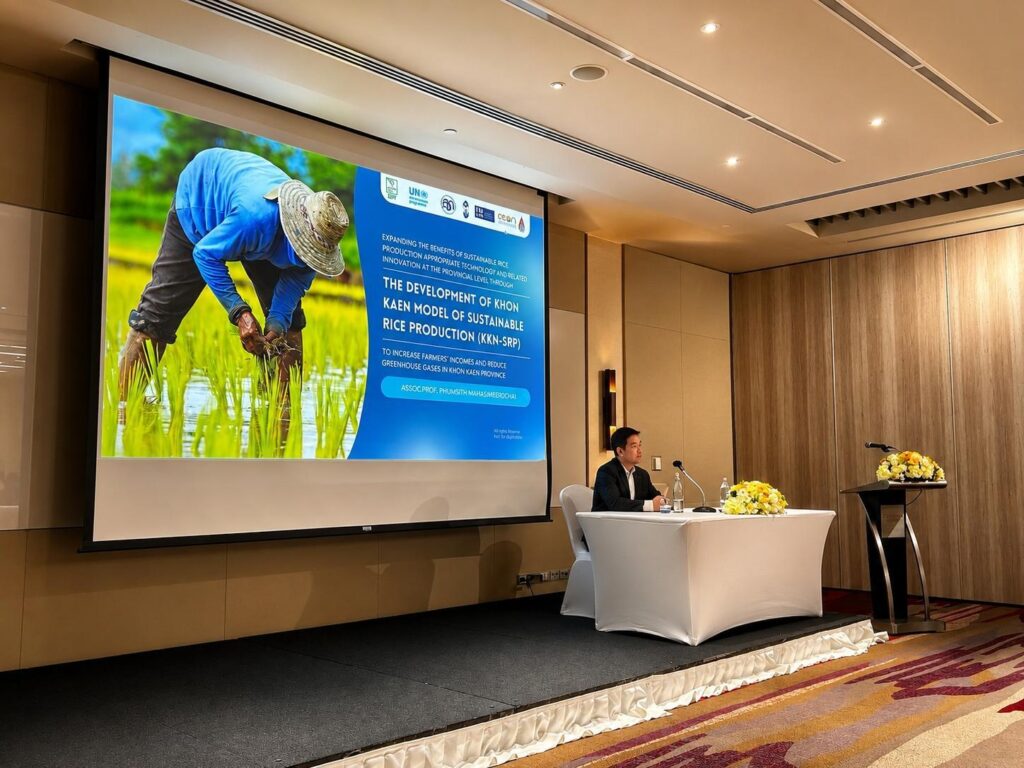
The conference further showcased the research outcomes of the “Khon Kaen Sustainable Rice Production (KKN-SRP)” project led by Associate Professor Dr. Phumsith Mahasuweerachai and his research team from Khon Kaen University. The project focuses on applying Sustainable Rice Platform standards and appropriate technologies to improve rice production efficiency, reduce production costs, increase farmer incomes, and mitigate greenhouse gas emissions in Khon Kaen Province.
According to the research findings, the project engaged farmers across 73 villages in three districts of Khon Kaen Province, covering more than 13,000 rai and involving over 950 farmers. Results demonstrated that SRP practices contributed to higher yields, lower production costs, and increased profitability compared to conventional rice farming systems. For example, farmers producing Hom Mali rice under SRP practices generated an additional profit of 415 THB per rai, while glutinous rice farmers achieved an increase of 699 THB per rai.
The discussions highlighted the market potential of sustainable rice standards such as SRP. By adopting SRP practices and meeting sustainability requirements, participating farmers can improve both product quality and market access. The project findings indicated that the adoption of sustainable rice standards could help increase farmers’ average selling prices by approximately 300 THB per ton for rice that meets the required standards, contributing to higher farmer incomes while strengthening Thailand’s position in sustainable rice markets.
“Our research highlights that social networks are one of the strongest drivers of behavioral change among farmers. The adoption of SRP practices is often influenced more effectively through relatives, neighbors, and local farmer networks than through formal communication channels alone.”
The study also demonstrated strong environmental benefits. Greenhouse gas emissions from SRP fields were significantly lower than conventional production systems, achieving approximately 70% emission mitigation in 2025 through improved water and nutrient management. In addition, the project successfully reduced rice residue burning in participating areas, particularly in Phra Yuen District, where satellite monitoring confirmed substantial reductions in burning activities. Importantly, the project achieved notable certification progress, with 805 farmers successfully meeting SRP certification requirements and more than 10,000 rai achieving compliance under the SRP Farm Standard and SRP Chain of Custody (CoC).
Throughout the discussions, participants emphasized that sustainable rice production is no longer solely an environmental issue but increasingly a market requirement. The conference highlighted how sustainability standards such as SRP can support Thailand’s transition toward higher-value rice markets while strengthening resilience across the rice value chain. For SRP, the Khon Kaen model represents a strong example of how multi-stakeholder collaboration, farmer-centered implementation, and market integration can create tangible impact at scale. The discussions reinforced the importance of connecting sustainability standards with real market opportunities, farmer incentives, and long-term policy support.
SRP appreciates the opportunity to join the dialogue and congratulates all partners involved in advancing sustainable rice production in Thailand. SRP looks forward to continued collaboration with research institutions, government agencies, farmers, and private-sector stakeholders to further accelerate the transition toward a more sustainable rice sector in Thailand.
By Thanaporn Thammawongsa
Related Post
SRP Board Election: One Seat, Two Outstanding Candidates, Your Vote Shapes What Comes Next
The SRP Board sets the direction for our entire movement — and this year, one seat, two exceptional leaders, and every member's vote will decide who helps steward that future. This is your moment to
Read More
From Pilot to Scale: SRP Convenes Record Webinar on the Low Carbon Assurance Model
Nearly 300 registrants of this webinar, the Value Change Initiative and private-sector buyers to shape the pathway from LCAM's India and Vietnam pilots to sector-wide implementation BANGKOK, 2 September 2026 — The Sustainable Rice Platform (SRP) today convened one of
Read More
Meet the Speakers: From Pilot to Scale – Shaping the Future of L-CAM | SRP Webinar, 2 September 2026
For a solution to matter at scale, it has to survive contact with the real world — different geographies, different value chains, different buyers asking different questions. That's exactly the stage SRP's Low-Carbon Assurance Module
Read More
SRP Webinar Recap: Your EU Green Claims Questions, Answered
On 20 August 2026, the Sustainable Rice Platform (SRP) hosted a webinar on the EU Empowering Consumers for the Green Transition (EmpCo) Directive and what it means for sustainability claims in the rice sector. Moderated
Read More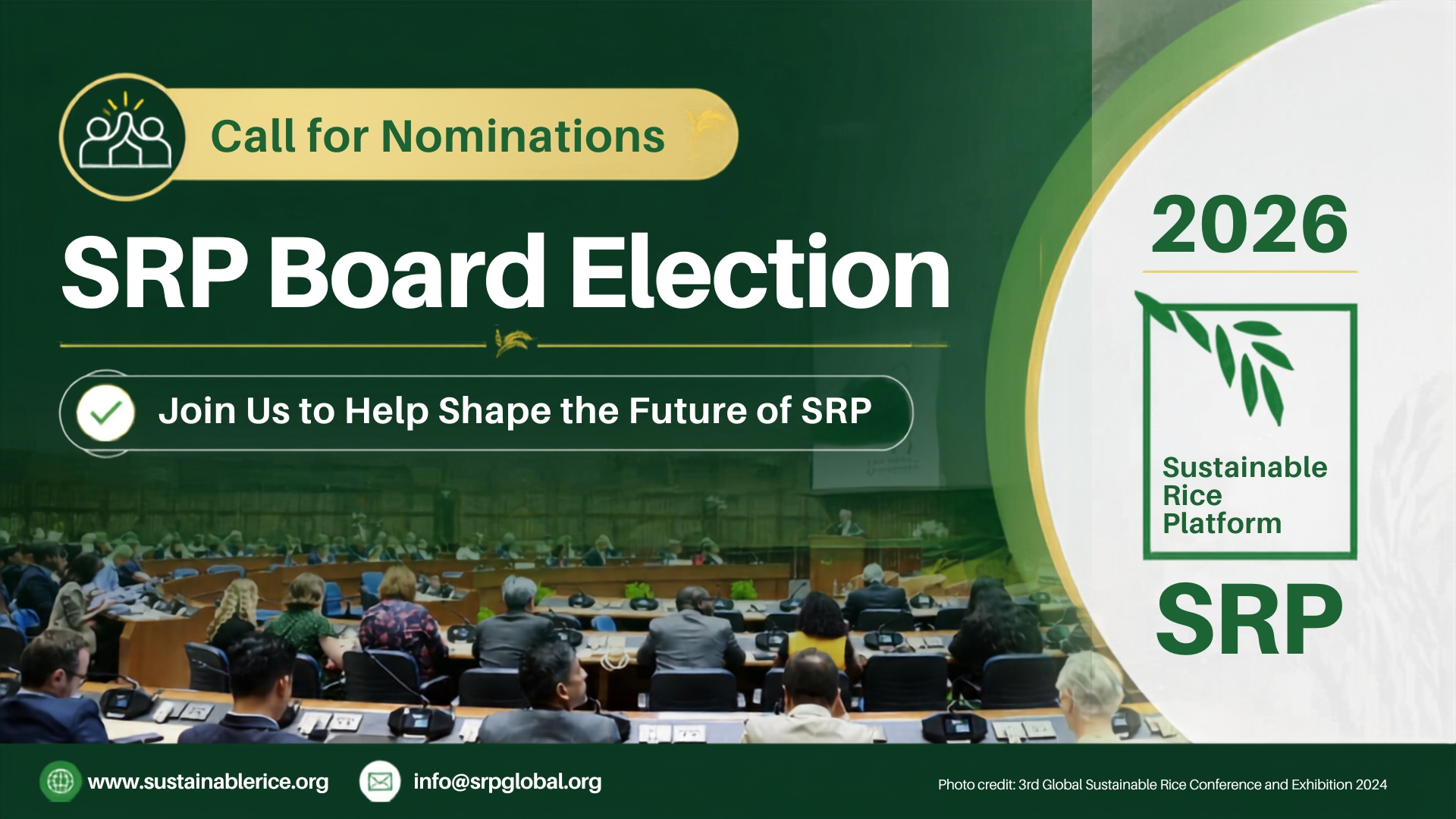
Call for Nominations: SRP Board Election — One Seat, One Vote, Your Voice
Nominations open 20 August 2026 This is your moment to help steer the future of the Sustainable Rice Platform. One seat on the SRP Board — At Large — is opening up. Unlike seats reserved
Read More
How SRP prepared for the EU Empowering Consumers for the Green Transition Directive
The EU Empowering Consumers for the Green Transition (EmpCo) Directive (Directive (EU) 2024/825) introduces new requirements to improve the transparency and credibility of environmental claims and sustainability labels, helping consumers make better-informed purchasing decisions. SRP is committed
Read More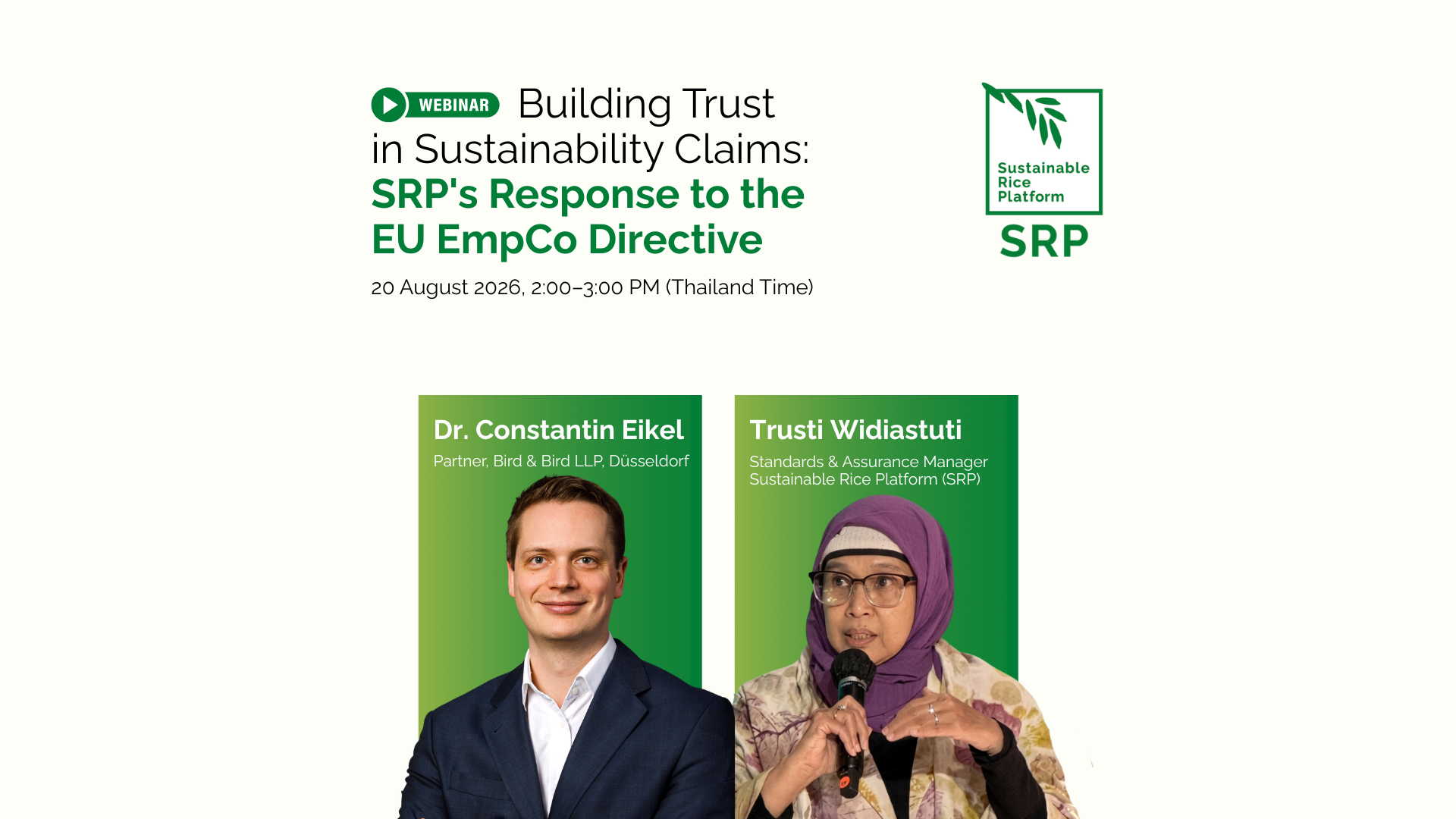
Meet the Speakers: Building Trust in Sustainability Claims: SRP’s Response to the EU EmpCo Directive | SRP Webinar, 20 August 2026
Starting 27 September 2026, the EU's EmpCo Directive comes into force — and it will fundamentally change how brands can talk about sustainability. Broad, unverified claims like "eco-friendly" or "green" won't hold up anymore unless
Read More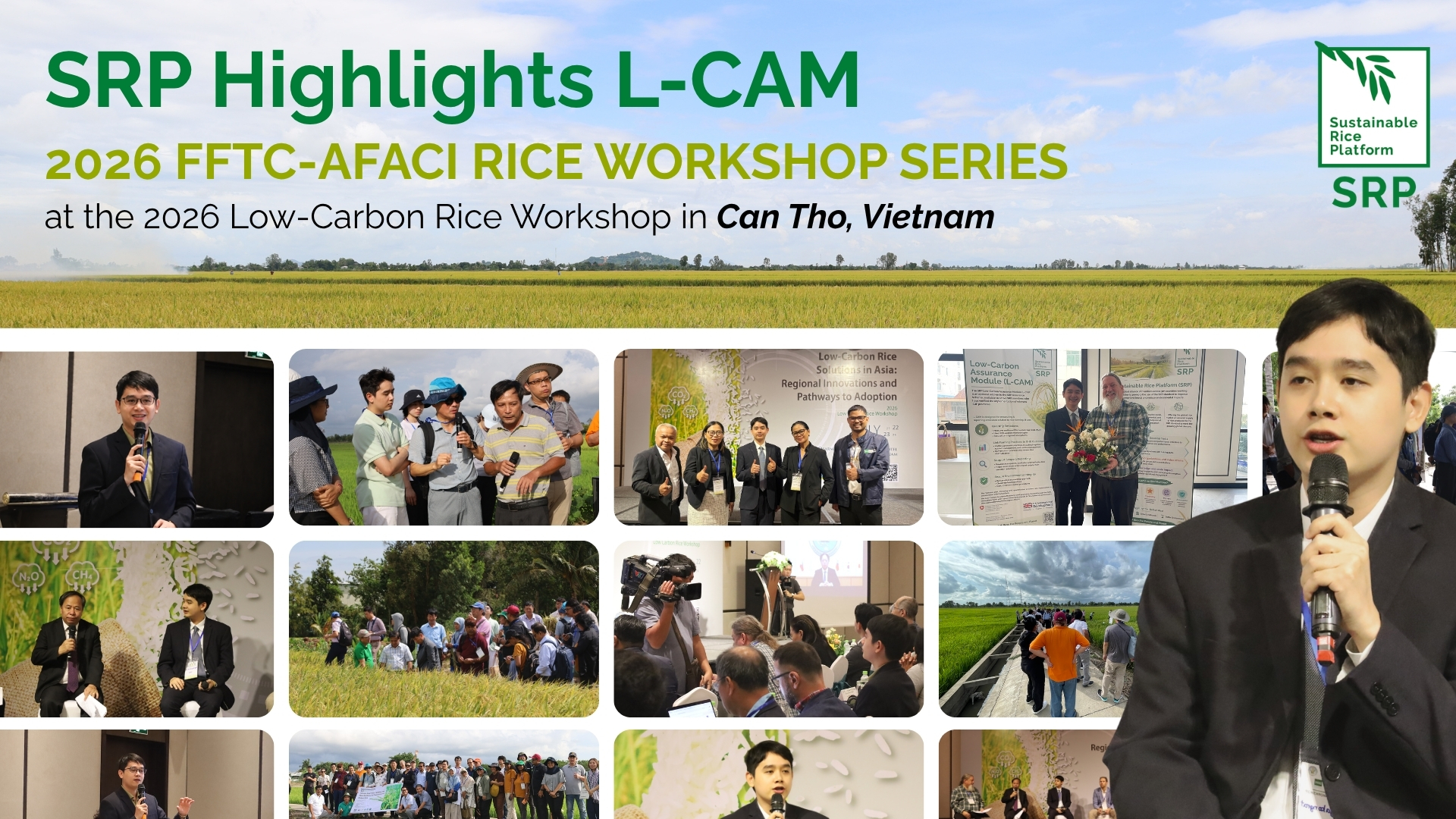
SRP Highlights L-CAM: 2026 FFTC-AFACI RICE WORKSHOP SERIES at the 2026 Low-Carbon Rice Workshop in Can Tho, Vietnam
From 22 to 24 July 2026, the rice world turned its attention to Can Tho City, Vietnam, for the FFTC workshop "Low-Carbon Rice Solutions in Asia." For the Sustainable Rice Platform (SRP), it was more than a
Read More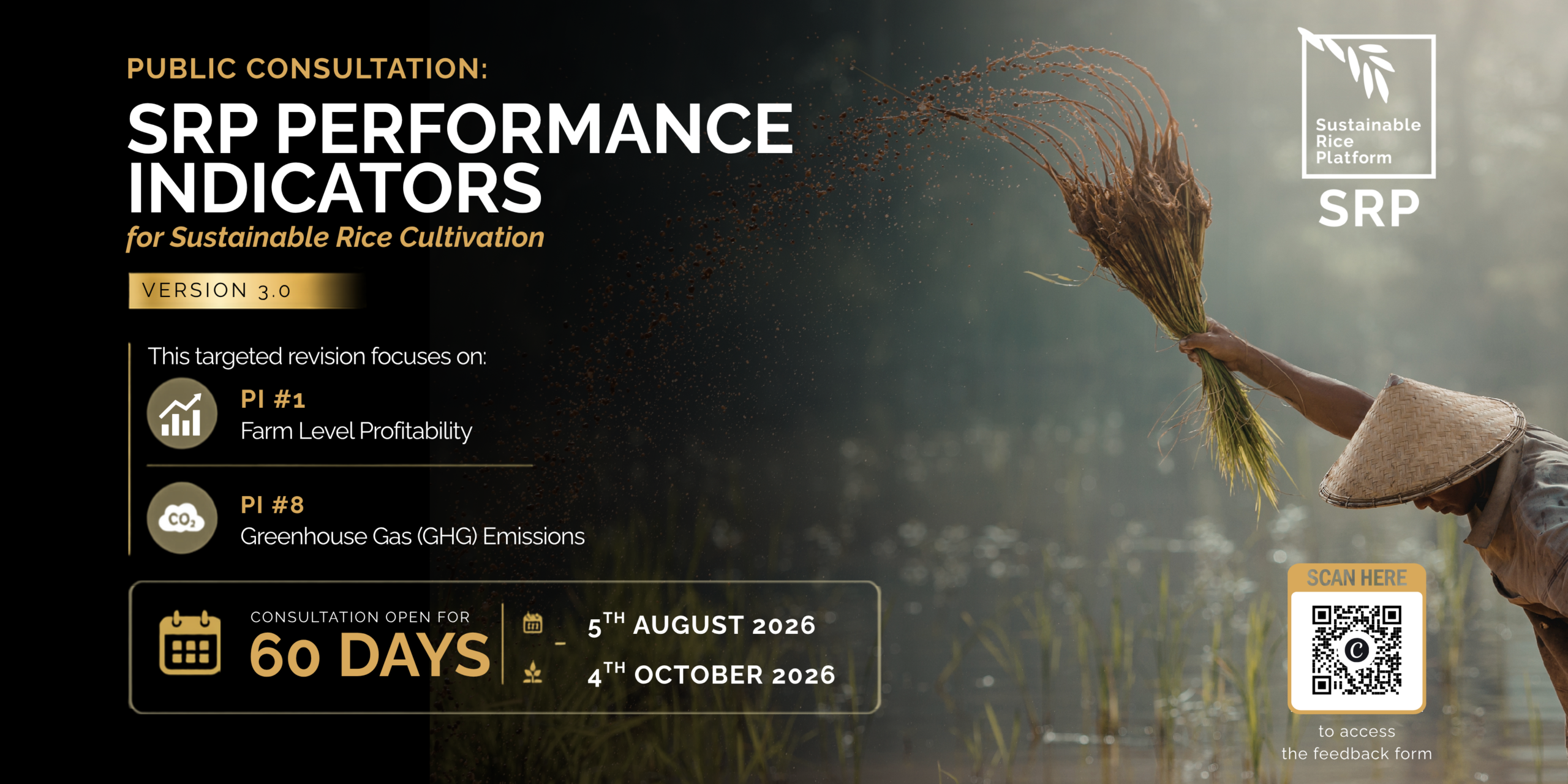
Public Consultation Open: Revision of SRP Performance Indicators for Sustainable Rice Cultivation
The Sustainable Rice Platform (SRP) invites stakeholders to participate in a 60-day public consultation on the proposed revision of the SRP Performance Indicators for Sustainable Rice Cultivation. The SRP Performance Indicators support the measurement of sustainability outcomes associated with rice cultivation and
Read More
Join Thai Webinar: Upgrade Thai Rice Production to meet an international market
As sustainability expectations continue to reshape global agricultural markets, the rice sector is entering a new era where transparency, traceability, and credible sustainability practices are becoming essential. To support stakeholders in navigating this transition, the
Read More