SRP on Simplifying Sustainability Communication and Strengthening Consumer Trust Across the Rice Sector
SRP acknowledges the evolving discussions around how sustainability standards are communicated and understood, particularly within increasingly complex sustainability landscapes where consumers are often presented with multiple labels and certification schemes across food products. Recent findings further highlight an important insight for the broader sustainability landscape also reflect the importance of long-term consumer trust, which is often shaped by familiarity, clarity, and consistent communication, particularly in mature markets where consumers are exposed to multiple sustainability certification systems and established sustainability signals.
Building trust in sustainable rice production takes time. Through clearer communication, aligned frameworks, and collaborative approaches, SRP aims to help make sustainability more practical, credible, and accessible for all stakeholders.
SRP as simplification reflects our commitment to helping create a more coherent and accessible sustainability landscape for the rice sector through greater alignment, clarity, and collaboration.
For the Sustainable Rice Platform (SRP), SRP recognizes the importance of simplifying sustainability communication across the rice sector. SRP sees value in helping create a more aligned and credible framework for sustainable rice production that makes sustainability easier to understand and navigate for businesses, farmers, retailers, and consumers alike. Rather than contributing to further fragmentation within sustainability communication, SRP positions itself as part of the solution by supporting greater alignment, transparency, and consistency across sustainable rice standards and supply chain engagement.
SRP believes that collaboration across trusted systems, market actors, and sustainability initiatives to help strengthen overall confidence in sustainable rice production. Advancing sustainability in the rice sector requires continued collaboration across the value chain to support improved environmental performance, farmer livelihoods, market transparency, and consumer understanding. Through its globally recognized framework for sustainable rice cultivation and supply chain engagement, SRP aims to contribute to a more coherent, practical, and trusted sustainability landscape while supporting long-term confidence in sustainable rice production.
By Thanaporn Thammawongsa
Related Post
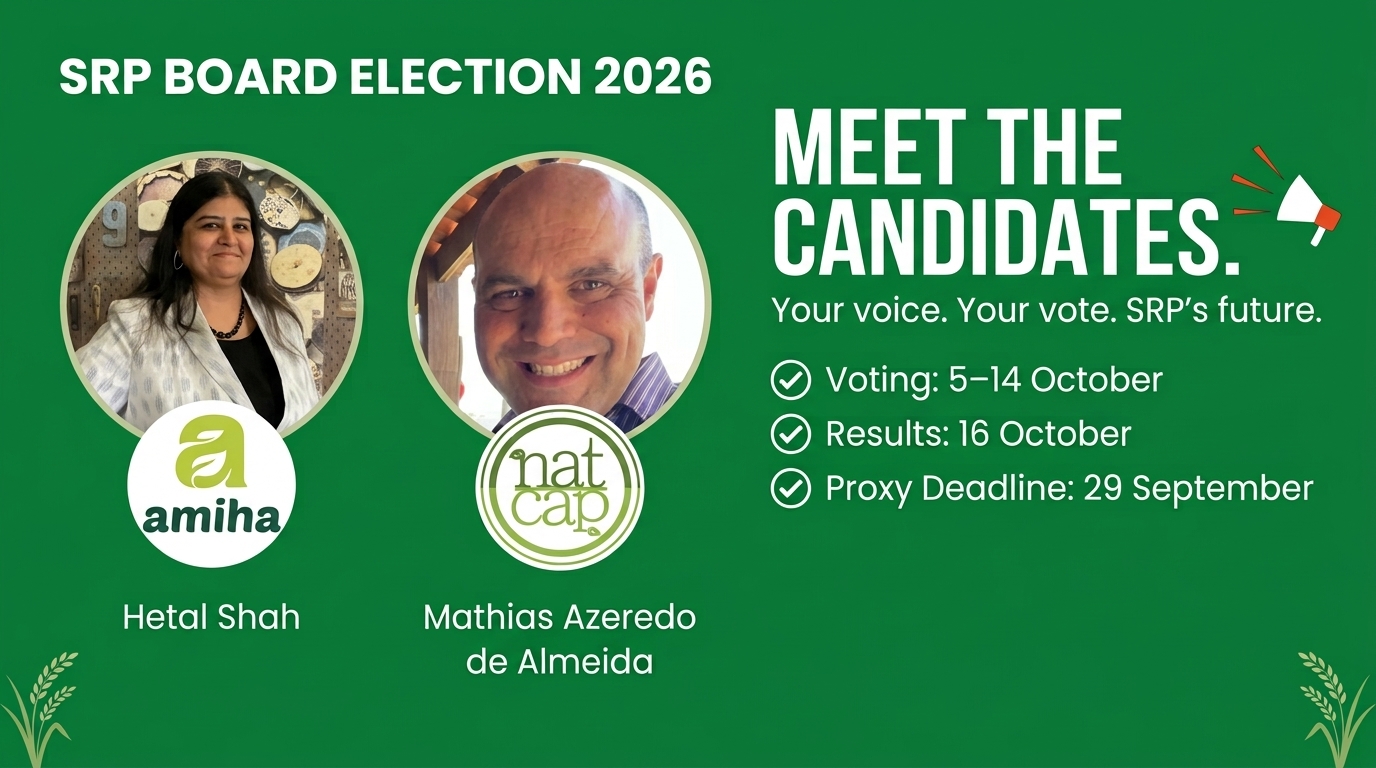
SRP Board Election: One Seat, Two Outstanding Candidates, Your Vote Shapes What Comes Next
The SRP Board sets the direction for our entire movement — and this year, one seat, two exceptional leaders, and every member's vote will decide who helps steward that future. This is your moment to
Read More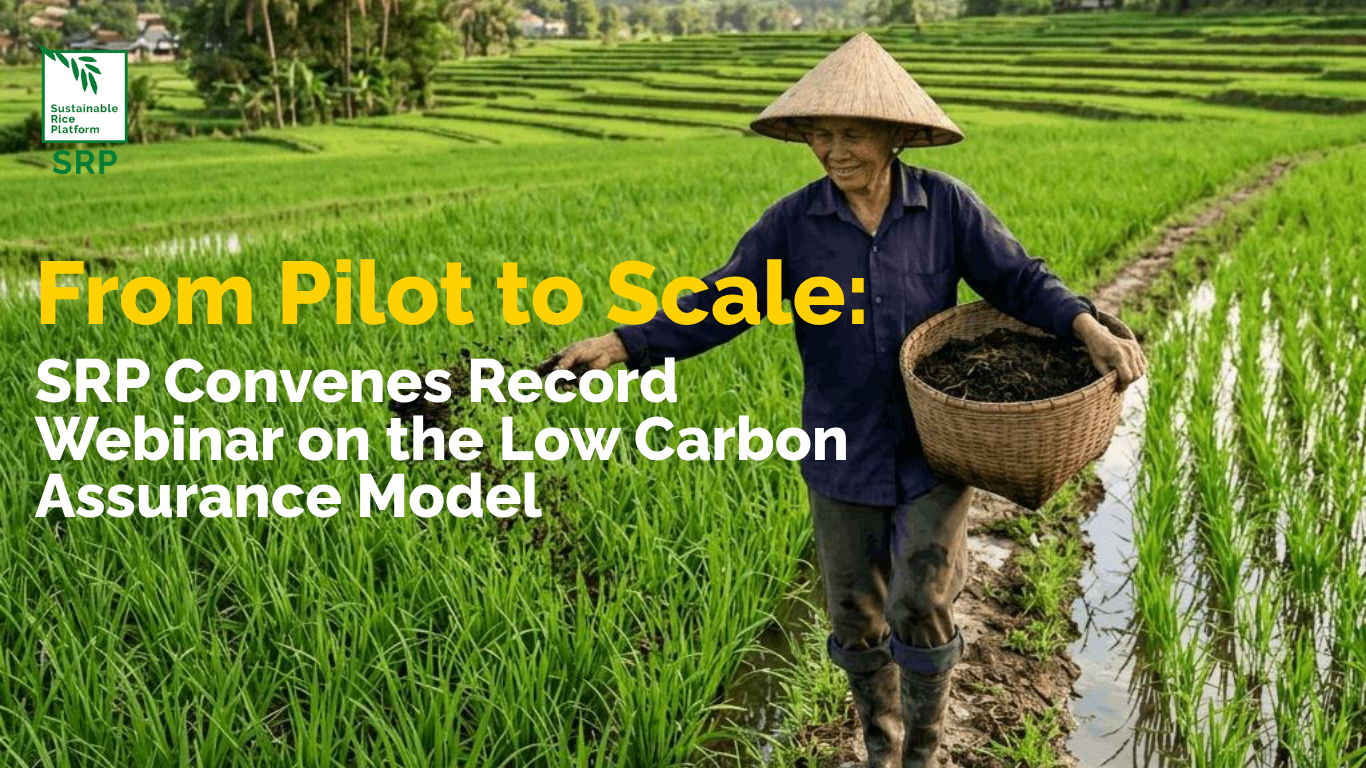
From Pilot to Scale: SRP Convenes Record Webinar on the Low Carbon Assurance Model
Nearly 300 registrants of this webinar, the Value Change Initiative and private-sector buyers to shape the pathway from LCAM's India and Vietnam pilots to sector-wide implementation BANGKOK, 2 September 2026 — The Sustainable Rice Platform (SRP) today convened one of
Read More
Meet the Speakers: From Pilot to Scale – Shaping the Future of L-CAM | SRP Webinar, 2 September 2026
For a solution to matter at scale, it has to survive contact with the real world — different geographies, different value chains, different buyers asking different questions. That's exactly the stage SRP's Low-Carbon Assurance Module
Read More
SRP Webinar Recap: Your EU Green Claims Questions, Answered
On 20 August 2026, the Sustainable Rice Platform (SRP) hosted a webinar on the EU Empowering Consumers for the Green Transition (EmpCo) Directive and what it means for sustainability claims in the rice sector. Moderated
Read More
Call for Nominations: SRP Board Election — One Seat, One Vote, Your Voice
Nominations open 20 August 2026 This is your moment to help steer the future of the Sustainable Rice Platform. One seat on the SRP Board — At Large — is opening up. Unlike seats reserved
Read More
How SRP prepared for the EU Empowering Consumers for the Green Transition Directive
The EU Empowering Consumers for the Green Transition (EmpCo) Directive (Directive (EU) 2024/825) introduces new requirements to improve the transparency and credibility of environmental claims and sustainability labels, helping consumers make better-informed purchasing decisions. SRP is committed
Read More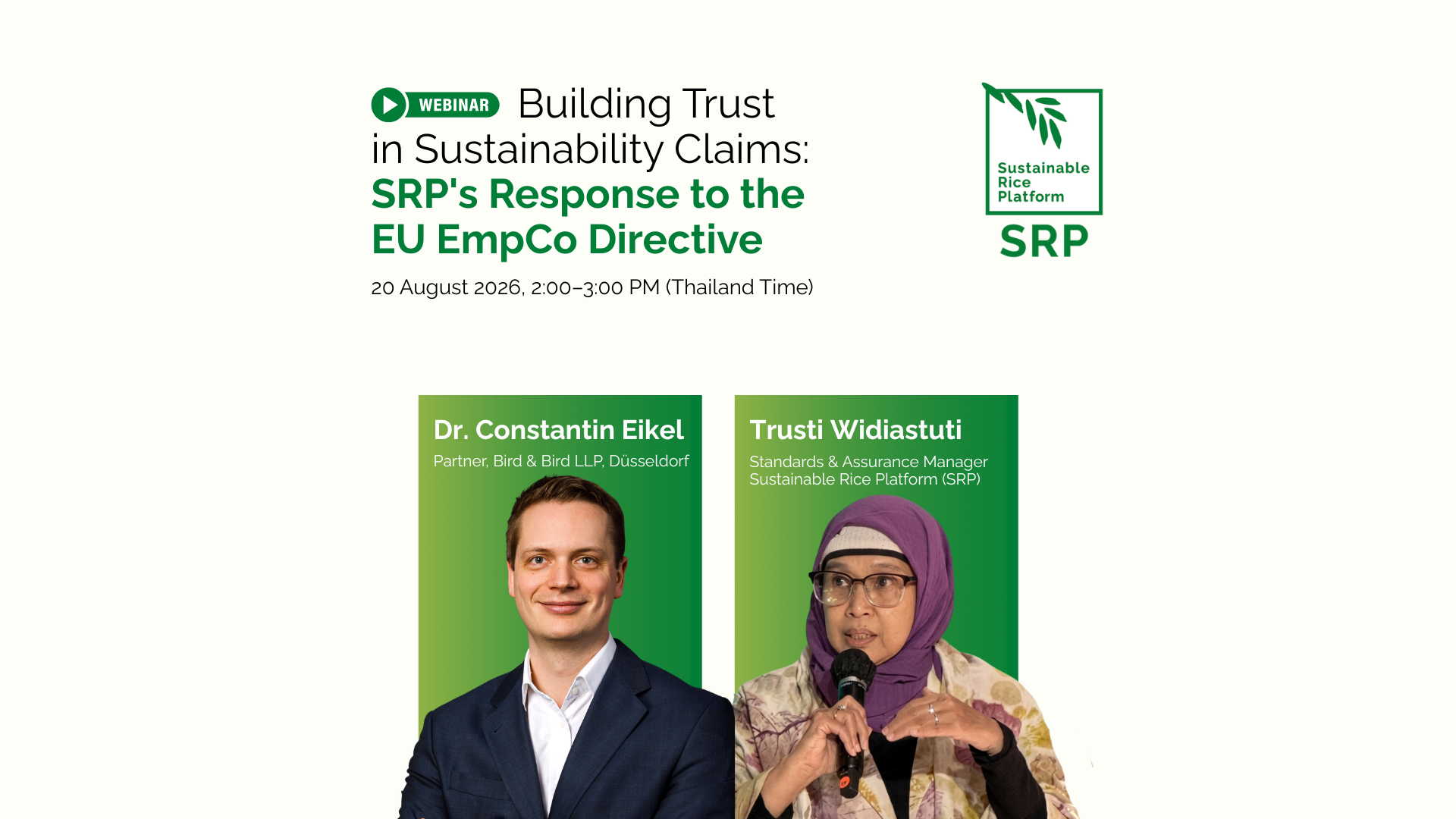
Meet the Speakers: Building Trust in Sustainability Claims: SRP’s Response to the EU EmpCo Directive | SRP Webinar, 20 August 2026
Starting 27 September 2026, the EU's EmpCo Directive comes into force — and it will fundamentally change how brands can talk about sustainability. Broad, unverified claims like "eco-friendly" or "green" won't hold up anymore unless
Read More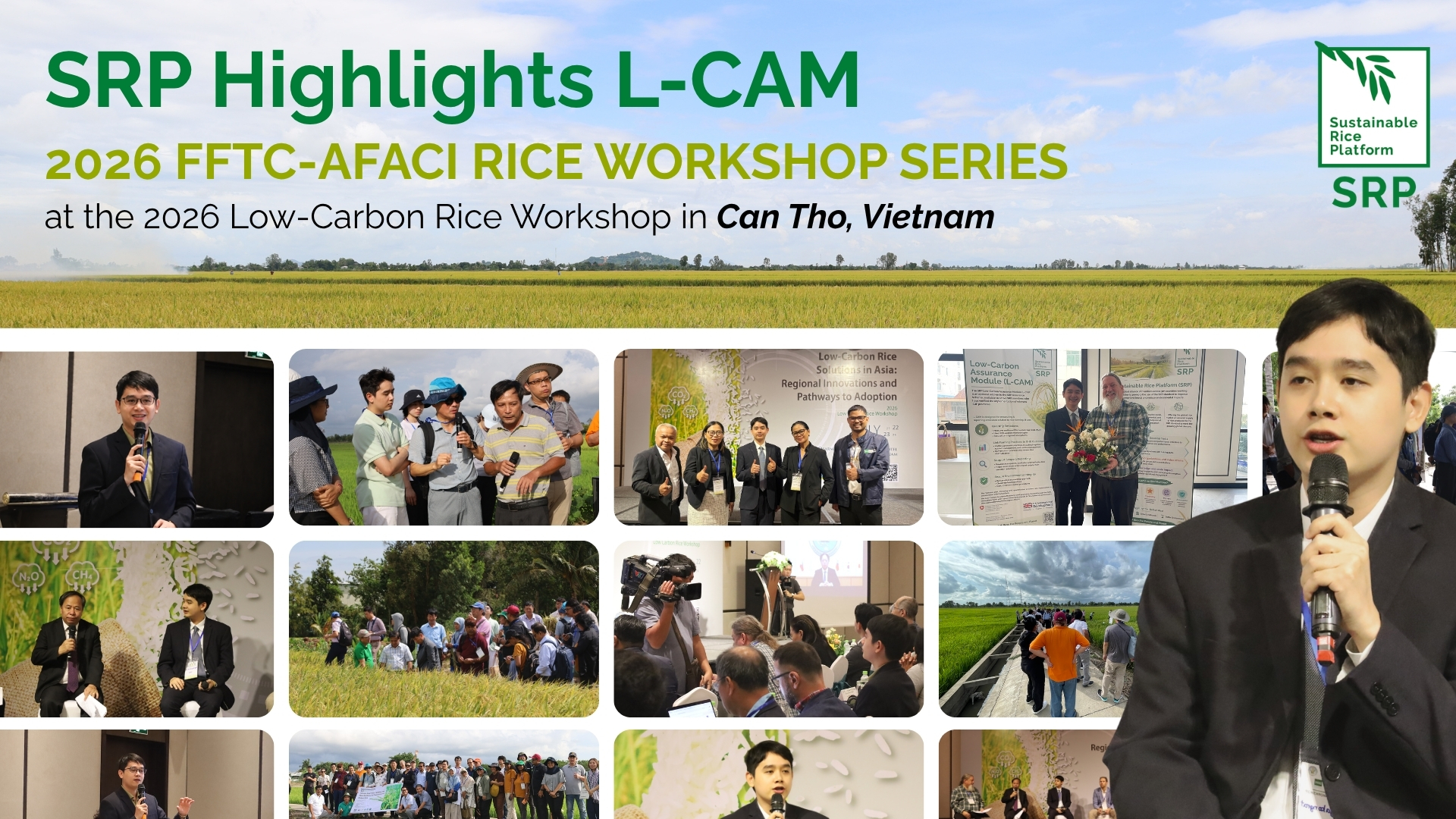
SRP Highlights L-CAM: 2026 FFTC-AFACI RICE WORKSHOP SERIES at the 2026 Low-Carbon Rice Workshop in Can Tho, Vietnam
From 22 to 24 July 2026, the rice world turned its attention to Can Tho City, Vietnam, for the FFTC workshop "Low-Carbon Rice Solutions in Asia." For the Sustainable Rice Platform (SRP), it was more than a
Read More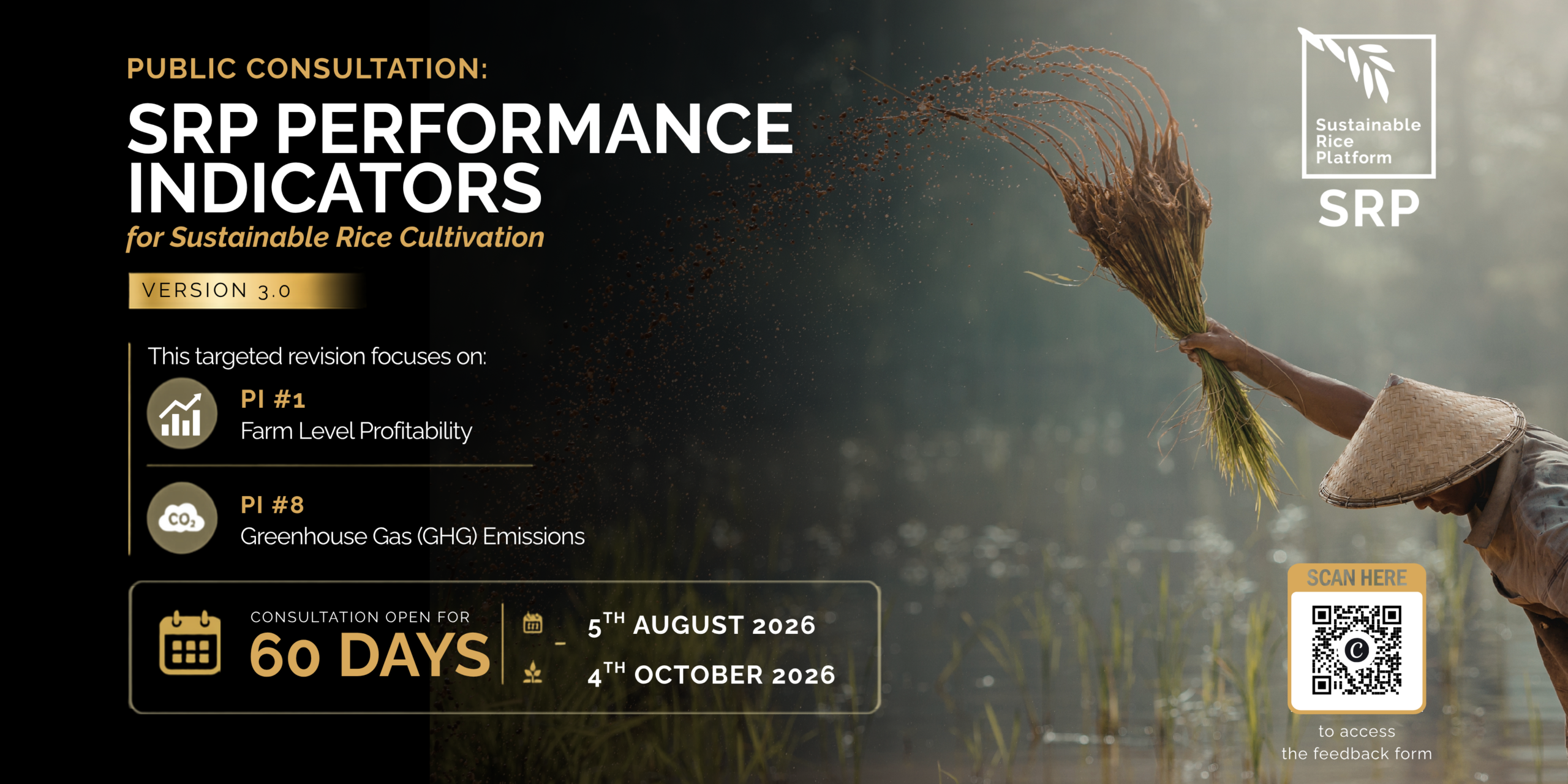
Public Consultation Open: Revision of SRP Performance Indicators for Sustainable Rice Cultivation
The Sustainable Rice Platform (SRP) invites stakeholders to participate in a 60-day public consultation on the proposed revision of the SRP Performance Indicators for Sustainable Rice Cultivation. The SRP Performance Indicators support the measurement of sustainability outcomes associated with rice cultivation and
Read More
Join Thai Webinar: Upgrade Thai Rice Production to meet an international market
As sustainability expectations continue to reshape global agricultural markets, the rice sector is entering a new era where transparency, traceability, and credible sustainability practices are becoming essential. To support stakeholders in navigating this transition, the
Read More