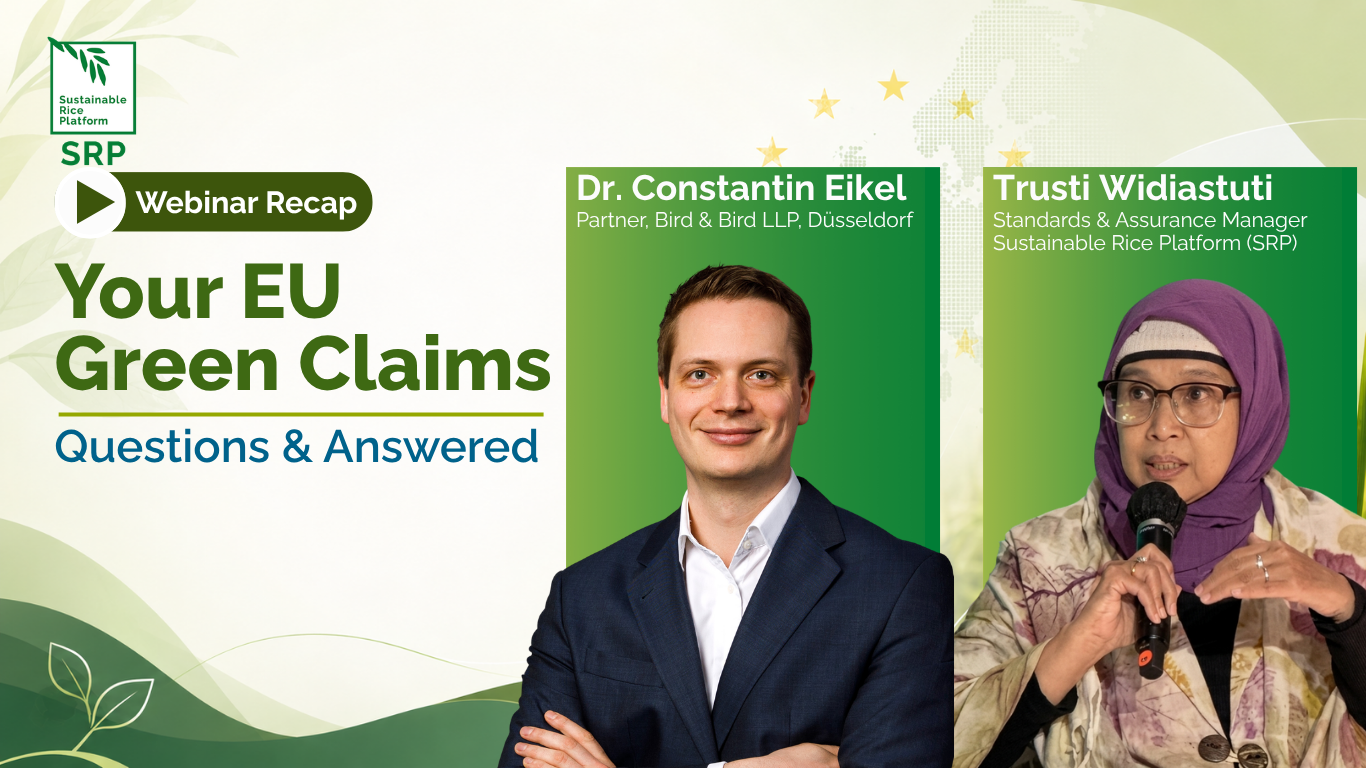
SRP Webinar Recap: Your EU Green Claims Questions, Answered
On 20 August 2026, the Sustainable Rice Platform (SRP) hosted a webinar on the EU Empowering Consumers for the Green Transition (EmpCo) Directive and what it means for sustainability claims in the rice sector. Moderated by Tun Boonyakongrat, Senior Membership and Communications Officer, the session brought together SRP leadership, technical experts and legal counsel to explore how businesses can hold onto consumer trust while adapting to new regulatory demands.
The session drew 34 participants from across the globe, including Italy, the United States, the United Kingdom, Thailand and Pakistan, among other countries — a turnout SRP was delighted with, and one that fed into a lively, practical discussion.
A New Era for Sustainability Claims
In his opening remarks, Peter McAllister, SRP’s Executive Director, pointed to the rapid growth in sustainability labels and claims as a source of both opportunity and confusion for buyers and consumers alike. The EU EmpCo Directive, applying from 27 September 2026, is designed to protect consumers from vague or misleading green claims and to ensure that sustainability labels are backed by credible, transparent certification schemes.
For SRP and its members, Peter framed this less as a compliance burden than as a chance to strengthen trust. The EU remains a key market for SRP-Verified rice, and SRP’s role, he said, is to give members clear, dependable tools so they can speak to buyers and consumers with confidence.
How SRP Is Adapting ?
Trusti Widiastuti, SRP’s Standards & Assurance Manager, walked through how SRP has reviewed both what sits behind its claims — standards, assurance, Chain of Custody — and how these are presented on-pack and online. Key updates include:
- SRP’s Brand Manual and Claims Guidelines — strengthened guidance on what can be claimed under the SRP-Verified label, added caution around generic terms like “sustainable” or “eco-friendly” in favour of precise, verifiable wording, and a clearer explanation of how the SRP-Verified label connects to different Chain of Custody models.
- Tighter artwork and claims review — a more structured internal check of label artwork and messaging before it reaches the market, so that products carrying the SRP-Verified label genuinely trace back to SRP-Verified producers.
- Improved consumer-facing information — a dedicated page explaining what the SRP-Verified label means and how verification works, with signposting to SRP’s core documents (Standard, Performance Indicators, Assurance Scheme, Chain of Custody, Brand Manual and Claims Guidelines) for anyone wanting more detail.
A central point from Trusti was one of scope: SRP-Verified confirms that defined SRP requirements have been met within a clear boundary — it does not, on its own, guarantee a specific percentage reduction in emissions or water use. Impact claims still need their own supporting data.
Legal Perspective: What EmpCo Expects?
Dr. Constantin, an environmental advertising lawyer, set out the regulatory context, covering the key EmpCo requirements for sustainability labels and generic environmental claims. His main points:
- There is no grace period — by 27 September 2026, all products on the EU market must comply.
- Sustainability labels must rest on credible certification schemes with public criteria, independent verification and safeguards against non-compliance.
- Generic terms like “green,” “eco-friendly” or “sustainable” will only hold up if they are clearly explained and backed by strong evidence right next to the claim.
He noted that SRP’s approach — using “Verified” on the label and steering clear of broad, unqualified sustainability language — already sits close to the new rules, and could become a competitive advantage as weaker labels fall away.
Q&A: From Regulation to Practice
The Q&A brought the regulation down to ground level, with participants raising the questions their own teams are already wrestling with.
Next Steps
In closing, Tun encouraged participants to stay engaged with SRP’s upcoming events and learning opportunities, make use of the updated Brand Manual and Claims Guidelines and SRP’s review process, and share feedback through the post-webinar survey to help shape future support.
The webinar recording and materials will be shared with registered participants. As the regulatory bar rises, SRP and its partners aren’t just adjusting to change — they’re working to position the rice sector as a benchmark for credible, trustworthy sustainability claims.
Related Post
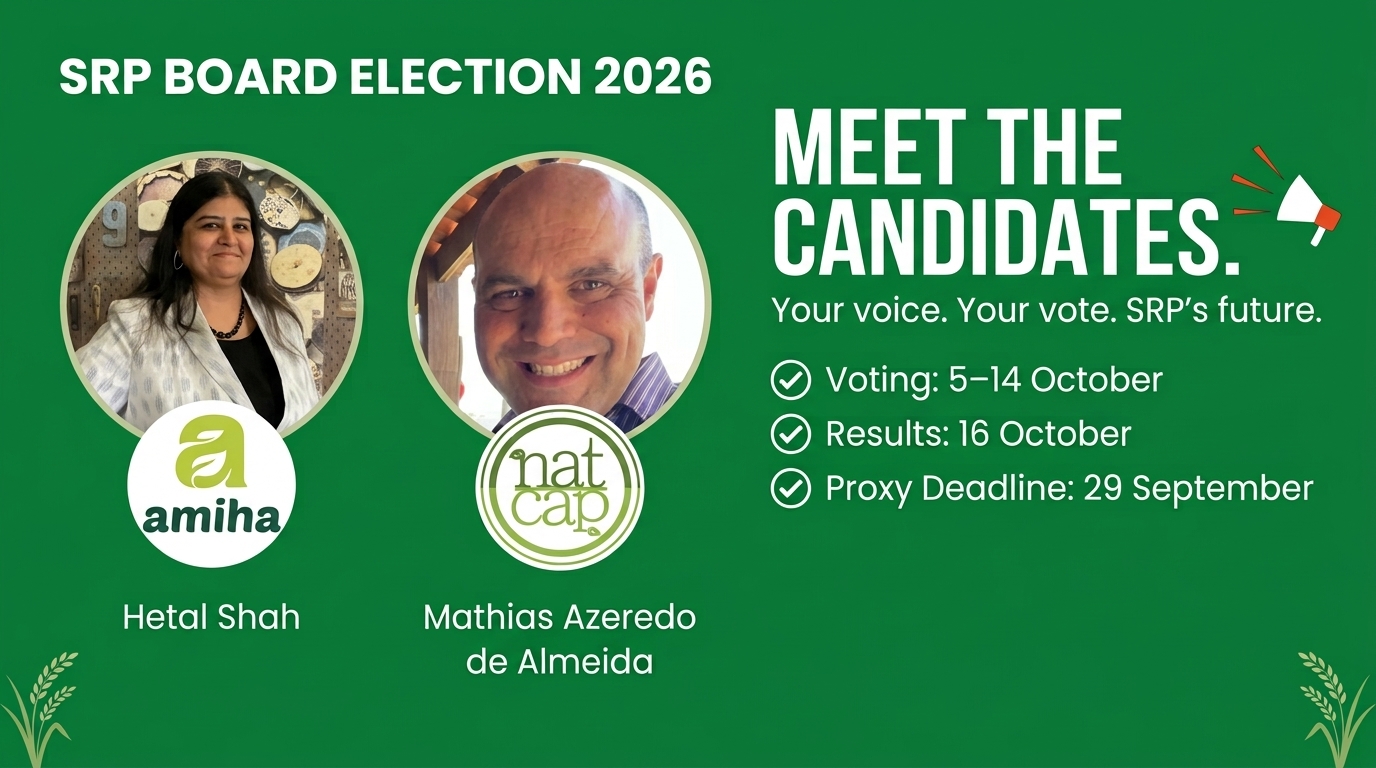
SRP Board Election: One Seat, Two Outstanding Candidates, Your Vote Shapes What Comes Next
The SRP Board sets the direction for our entire movement — and this year, one seat, two exceptional leaders, and every member's vote will decide who helps steward that future. This is your moment to
Read More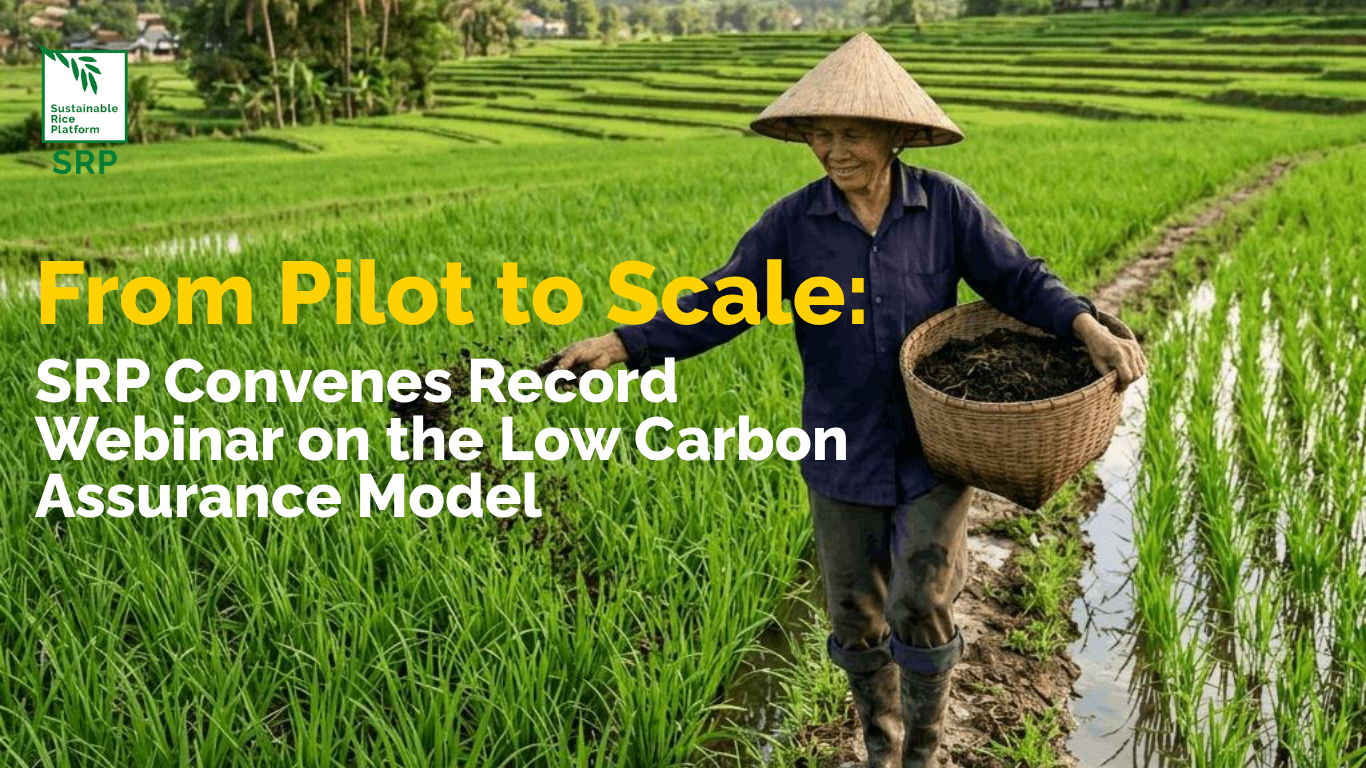
From Pilot to Scale: SRP Convenes Record Webinar on the Low Carbon Assurance Model
Nearly 300 registrants of this webinar, the Value Change Initiative and private-sector buyers to shape the pathway from LCAM's India and Vietnam pilots to sector-wide implementation BANGKOK, 2 September 2026 — The Sustainable Rice Platform (SRP) today convened one of
Read More
Meet the Speakers: From Pilot to Scale – Shaping the Future of L-CAM | SRP Webinar, 2 September 2026
For a solution to matter at scale, it has to survive contact with the real world — different geographies, different value chains, different buyers asking different questions. That's exactly the stage SRP's Low-Carbon Assurance Module
Read More
Call for Nominations: SRP Board Election — One Seat, One Vote, Your Voice
Nominations open 20 August 2026 This is your moment to help steer the future of the Sustainable Rice Platform. One seat on the SRP Board — At Large — is opening up. Unlike seats reserved
Read More
How SRP prepared for the EU Empowering Consumers for the Green Transition Directive
The EU Empowering Consumers for the Green Transition (EmpCo) Directive (Directive (EU) 2024/825) introduces new requirements to improve the transparency and credibility of environmental claims and sustainability labels, helping consumers make better-informed purchasing decisions. SRP is committed
Read More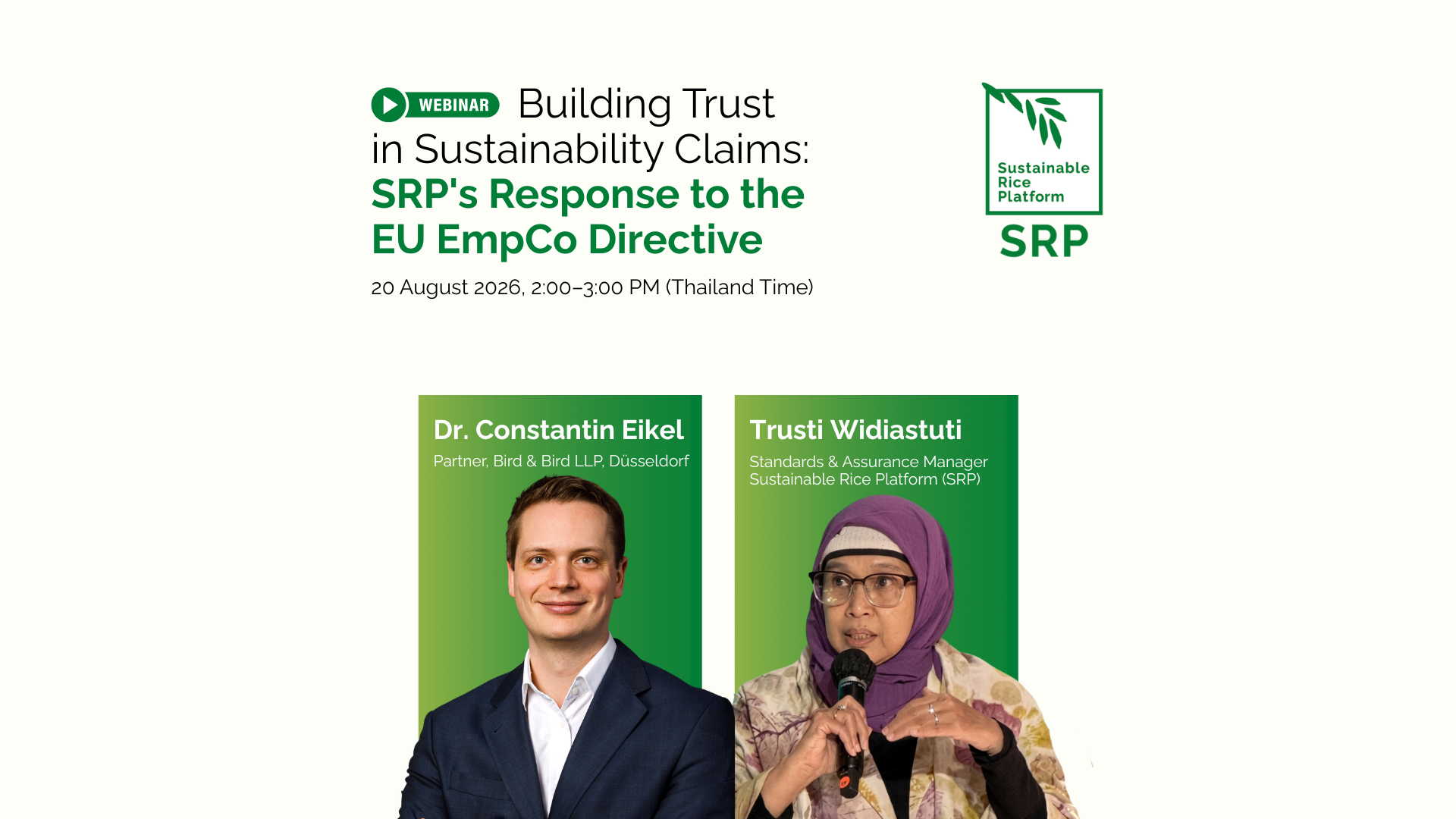
Meet the Speakers: Building Trust in Sustainability Claims: SRP’s Response to the EU EmpCo Directive | SRP Webinar, 20 August 2026
Starting 27 September 2026, the EU's EmpCo Directive comes into force — and it will fundamentally change how brands can talk about sustainability. Broad, unverified claims like "eco-friendly" or "green" won't hold up anymore unless
Read More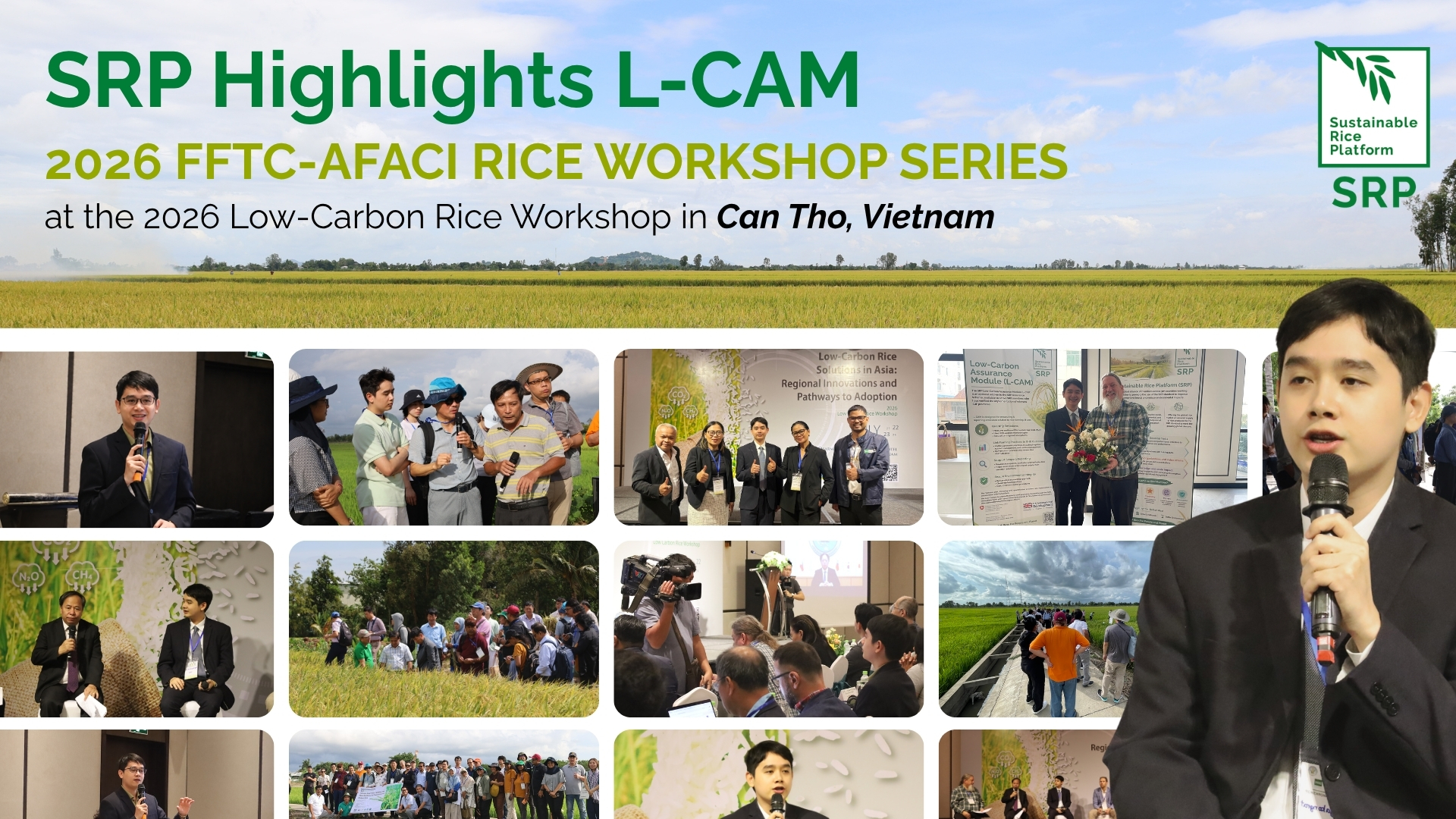
SRP Highlights L-CAM: 2026 FFTC-AFACI RICE WORKSHOP SERIES at the 2026 Low-Carbon Rice Workshop in Can Tho, Vietnam
From 22 to 24 July 2026, the rice world turned its attention to Can Tho City, Vietnam, for the FFTC workshop "Low-Carbon Rice Solutions in Asia." For the Sustainable Rice Platform (SRP), it was more than a
Read More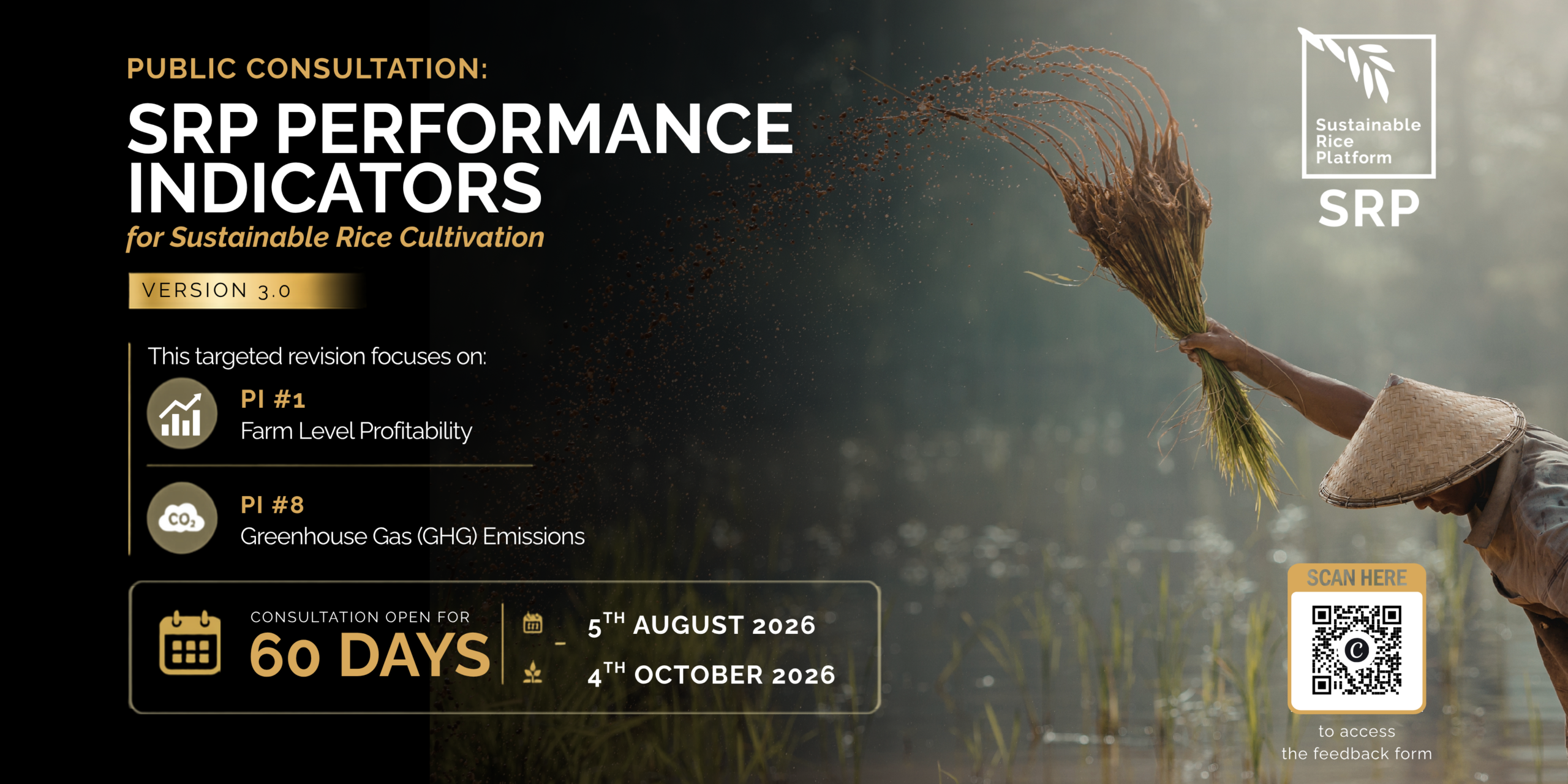
Public Consultation Open: Revision of SRP Performance Indicators for Sustainable Rice Cultivation
The Sustainable Rice Platform (SRP) invites stakeholders to participate in a 60-day public consultation on the proposed revision of the SRP Performance Indicators for Sustainable Rice Cultivation. The SRP Performance Indicators support the measurement of sustainability outcomes associated with rice cultivation and
Read More
Join Thai Webinar: Upgrade Thai Rice Production to meet an international market
As sustainability expectations continue to reshape global agricultural markets, the rice sector is entering a new era where transparency, traceability, and credible sustainability practices are becoming essential. To support stakeholders in navigating this transition, the
Read More
SRP Webinar, 20 August: Preparing for the EU EmpCo Directive
When "Sustainable" Has to Mean Something For years, sustainability claims have lived in a grey zone — a green leaf on a label, a promise of "eco-friendly," a badge nobody quite remembers verifying. Consumers wanted
Read More