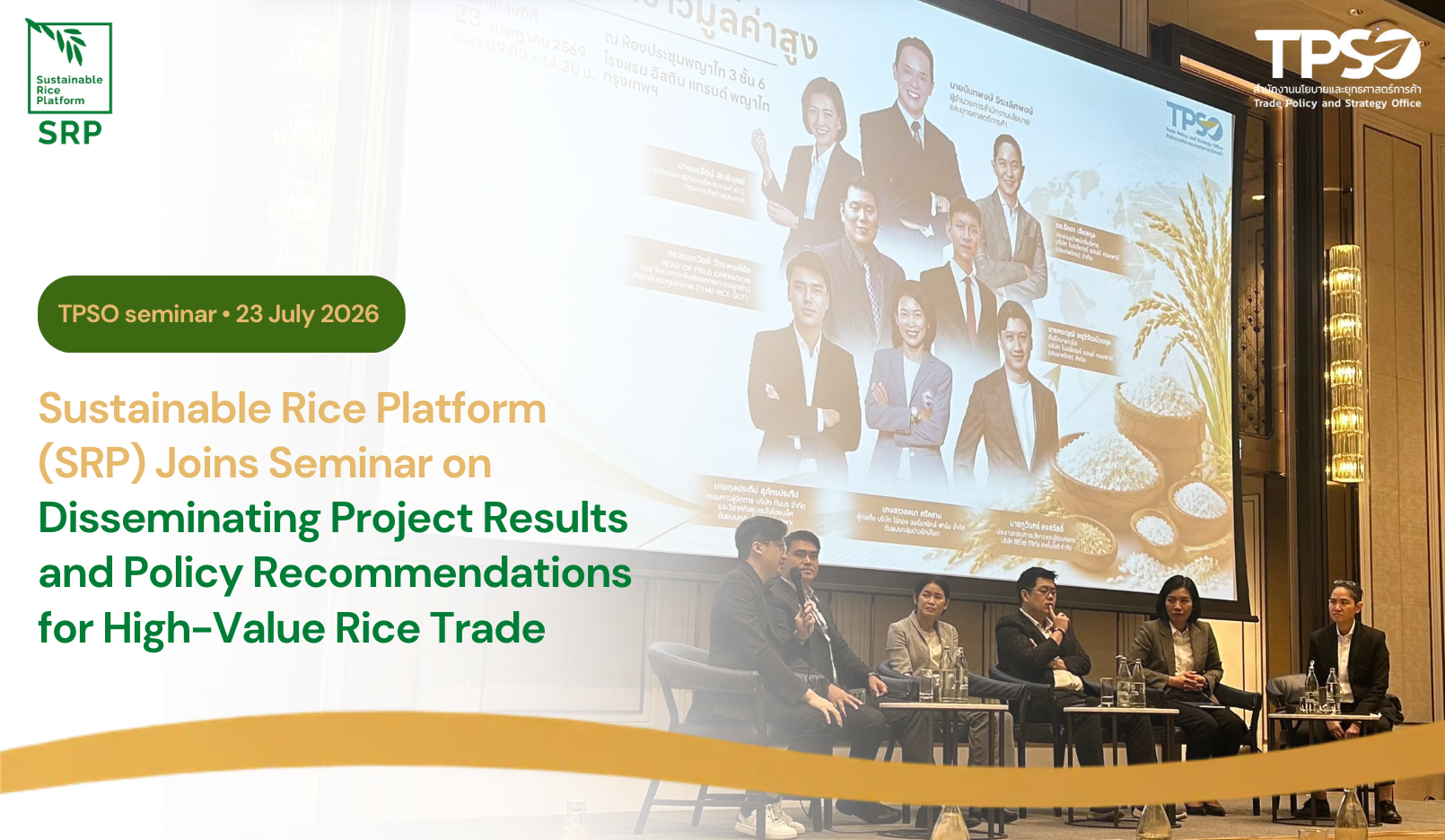
SRP Joins Seminar on Project Results Dissemination and Policy Recommendations for High-Value Rice Trade
Phaya Thai 3 Meeting Room, 6th Floor, Eastin Grand Hotel Phaya Thai, Bangkok – 23 July 2026
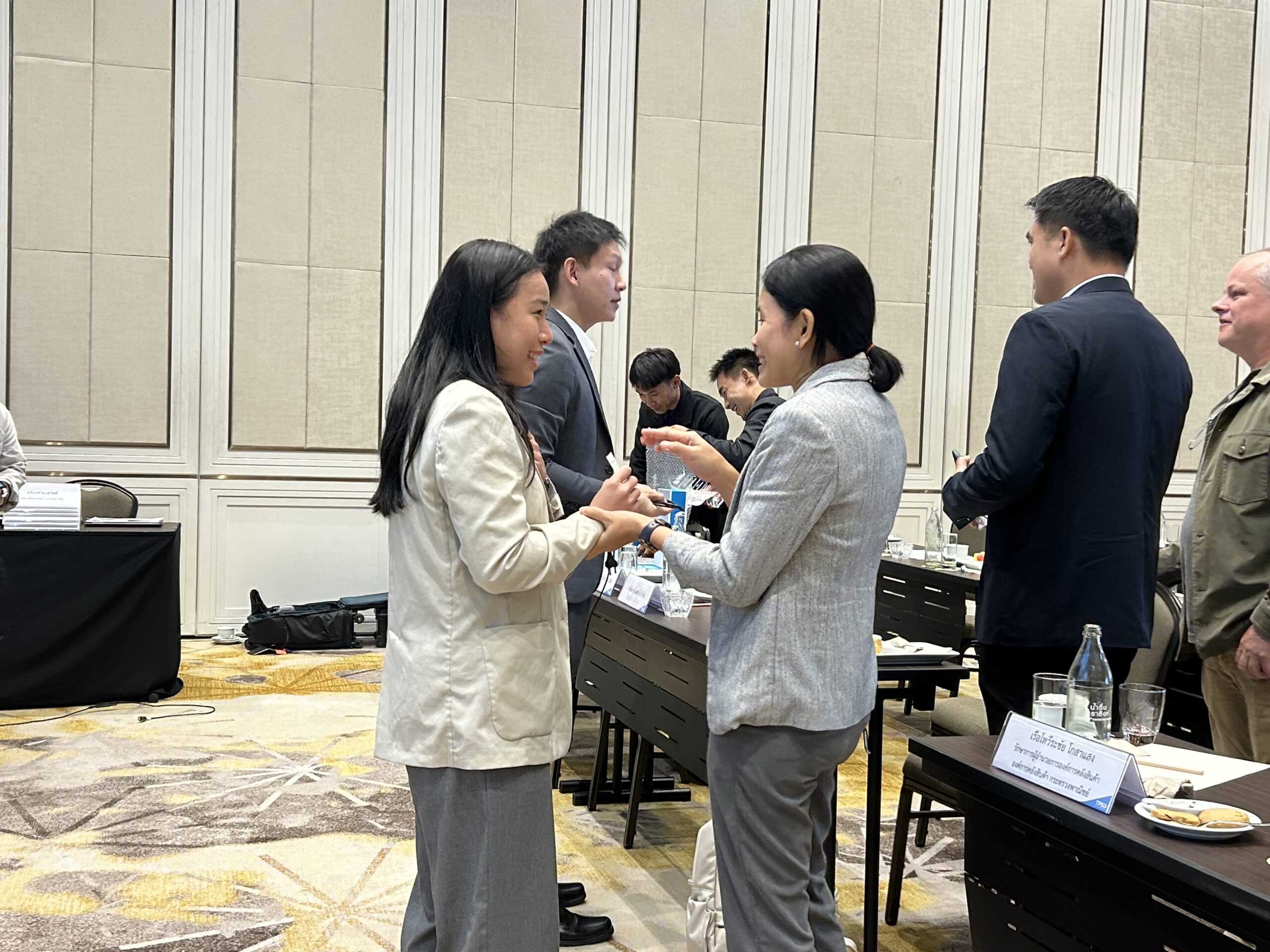
On 23 July 2026, Thailand’s Trade Policy and Strategy Office (TPSO), together with Bolliger & Company, hosted a seminar in Bangkok unveiling a national study on raising rice farmers’ income through high-value rice. The Sustainable Rice Platform (SRP) was honored to take part, represented by Ms. Kunpreya Maneerat, Partnership Officer, together with Ms. Jidapa Noosawas and Ms. Banjarat Jitpongta as representatives, alongside the Department of Foreign Trade, Thai Rice GCF, and leading rice entrepreneurs.
The seminar brought together eight speakers across policy, technical, and industry perspectives:
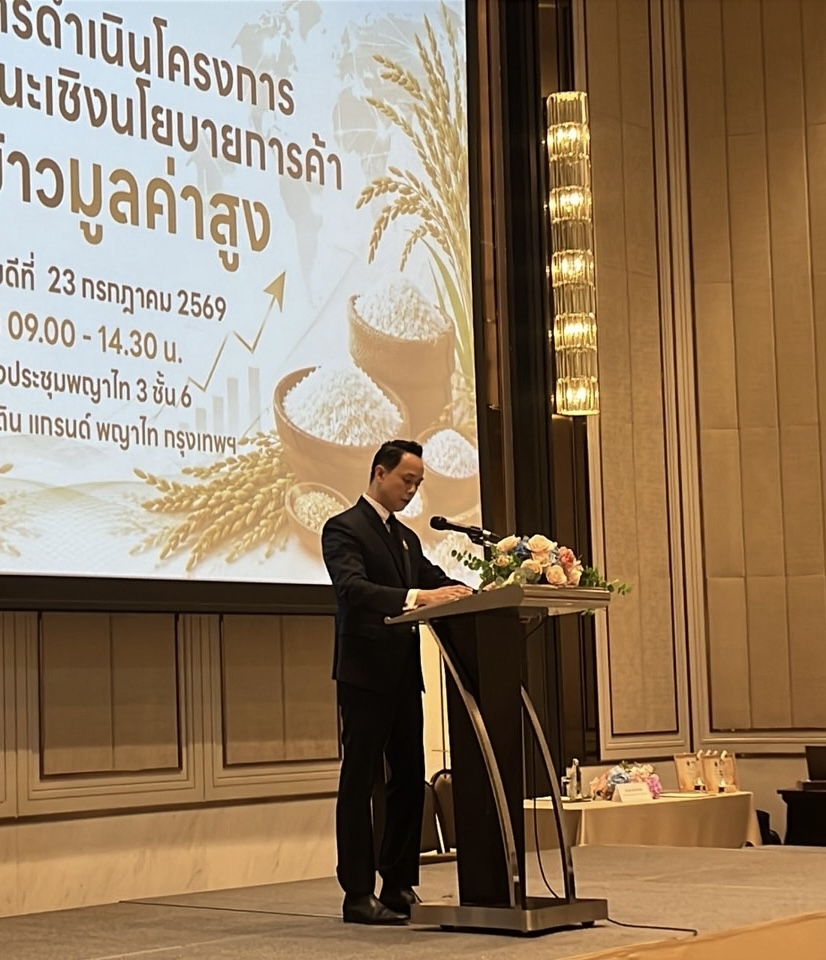
TPSO Director-General Mr. Nantapong Jiralertpong opened with a clear message: as global rice supply pressures squeeze prices, Thailand the world’s 6th largest rice exporter must shift from “selling volume” to “selling value.”
Three Pillars of High-Value Rice
TPSO’s study sorts the future of Thai rice into three groups:
Field Trip Insights: Hong Kong & Guangzhou
1. Consumers really will pay more but there’s a ceiling
Both cities showed willingness to pay 11–25% more for rice grown under credible sustainability and health standards. Guangzhou stood out even more clearly: 70% said they’d pay 11–50% more, and only 2% refused any premium at all compared to Hong Kong, where 15% wouldn’t pay extra. This makes Guangzhou the stronger premium-market opportunity of the two.
2. Thai rice wins on quality, but loses on “sustainability image”
Thai rice scored highest on quality and taste in both cities but scored lowest on “premium image” and “environmental friendliness.” In other words, the product itself is landing with consumers, but the sustainability story behind it isn’t getting through. This is exactly the gap SRP is positioned to help close.
3. Competitors are closing in from both inside and outside China
China has developed its own short-grain variety (“Dao Hua Xiang”) that consumers now see as rivaling Thai rice in taste, at a lower price. At the same time, China doesn’t recognize foreign organic certifications (EU/US), putting Thai organic rice at an automatic disadvantage there. On top of that, Thailand hasn’t run a sustained marketing push in China for nearly a decade so younger consumers are growing less attached to Thai rice than their parents’ generation was.
What Is the Game Changer for High-Value Rice?
Panelists agreed there’s no single fix. Some pointed to policy clear income indicators backed by real government support. The real test is whether this becomes lasting change, not just another short-lived push. Others named climate as the wildcard rice can’t control. They called for AI to play a bigger role not just watching climate risk and supporting low-carbon farming, but measuring rice quality itself and tracking it over time to keep improving it.
In the short term, certification remains a major barrier, as Thailand still relies primarily on its domestic organic label and needs a stronger, internationally recognized standard. Over the medium term, priorities include developing improved rice varieties, strengthening agencies that support seed systems and production, and advancing market segmentation to better position Thai rice for the right customers rather than competing mainly on price. In the long term, the challenge is to make farming a respected and attractive career choice for younger generations.
On the commercial side, speakers were candid: growing good rice isn’t the hard part anymore selling it is. Branding, understanding the real customer, and earning repeat purchases are areas where Thai producers still fall short, and a stronger marketing strategy is key to closing that gap. The competition is heating up too. Vietnam is already giving farmers direct incentives a move that will make the race for the high-value rice market tougher for everyone.
The Importance of SRP’s Participation
TPSO’s study sorts the future of Thai rice into three groups: Rice for the Planet, Rice with a Story, and Health Rice. Within Rice for the Planet, the study names three components sustainable rice, low-carbon rice, and organic rice and defines “sustainable rice” specifically as rice grown under the SRP Standard, covering four dimensions: environmental, economic, social, and management. This gives SRP a named seat within TPSO’s high-value rice strategy something few sustainability standards can claim.
The Opportunity for SRP
The seminar highlighted a strong alignment between Thailand’s high-value rice strategy and SRP’s mission. By identifying the SRP Standard as the reference for sustainable rice, TPSO has positioned SRP as a recognized sustainability benchmark within the national strategy. The discussions also reinforced SRP’s relevance. As speakers called for more internationally recognized certification, stronger market positioning, improved production, and greater use of technology, SRP is well placed to support these priorities through its globally recognized standard and farmer-focused sustainability framework. As Thailand advances its high-value rice strategy, SRP has a valuable opportunity to work with government, research institutions, and the private sector to strengthen sustainability, improve market competitiveness, and expand access to high-value markets.
Key Takeaways
Thailand is building its rice strategy around sustainability and value, not volume and SRP is named as the reference standard for what “sustainable” means within that strategy. Certification credibility is a live gap: Thailand still leans mainly on its domestic organic label, and multiple speakers called for a more internationally recognized standard. TPSO is currently studying global demand for high-value rice by country, and developing area-based policy proposals to shift cultivation from price-volatile common white rice toward high-value rice that matches consumer demand and commands higher prices.
SRP congratulates TPSO and all partners on this important milestone in advancing Thailand’s high-value rice strategy. We look forward to continued collaboration with government agencies, research institutions, and private-sector stakeholders to strengthen sustainability standards, create greater value for farmers, and support the long-term competitiveness of Thailand’s rice sector.
by Jidapa Noosawas
Related Post
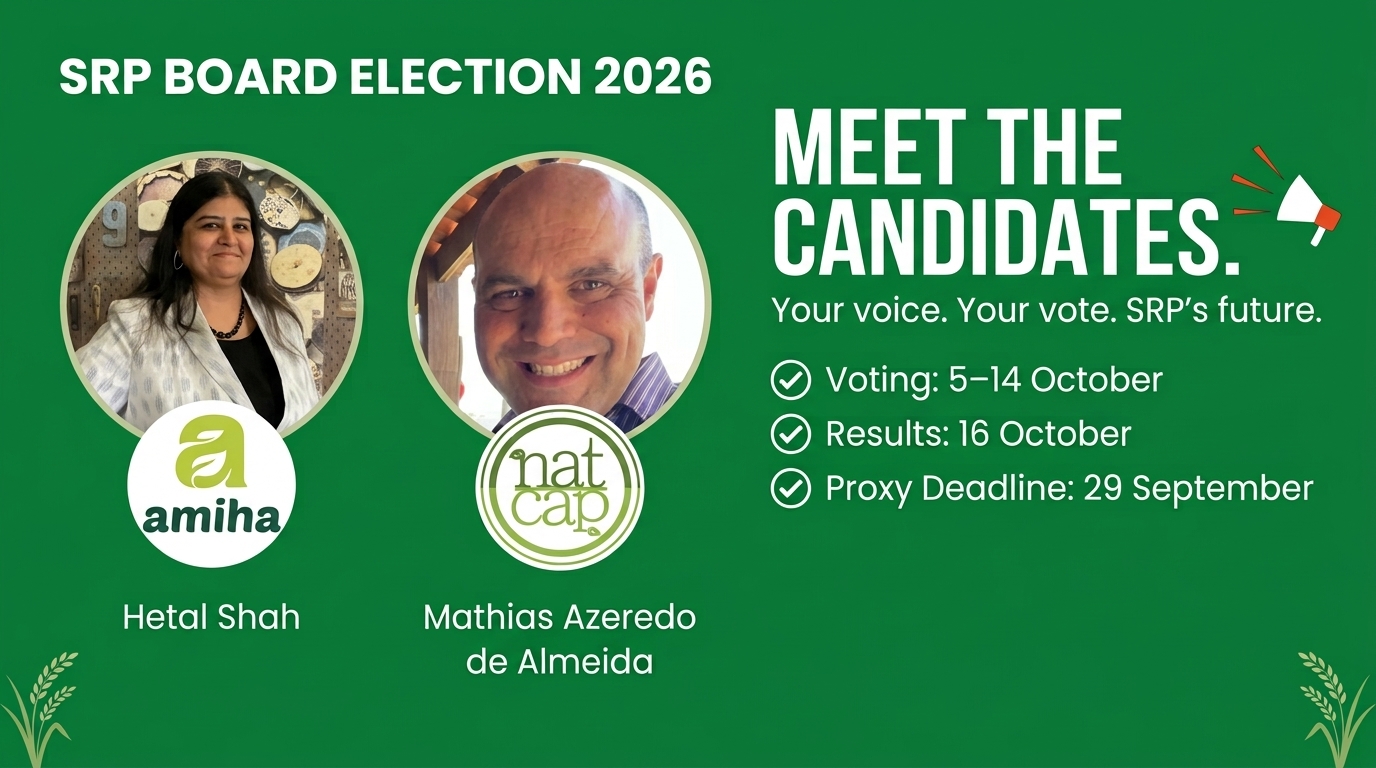
SRP Board Election: One Seat, Two Outstanding Candidates, Your Vote Shapes What Comes Next
The SRP Board sets the direction for our entire movement — and this year, one seat, two exceptional leaders, and every member's vote will decide who helps steward that future. This is your moment to
Read More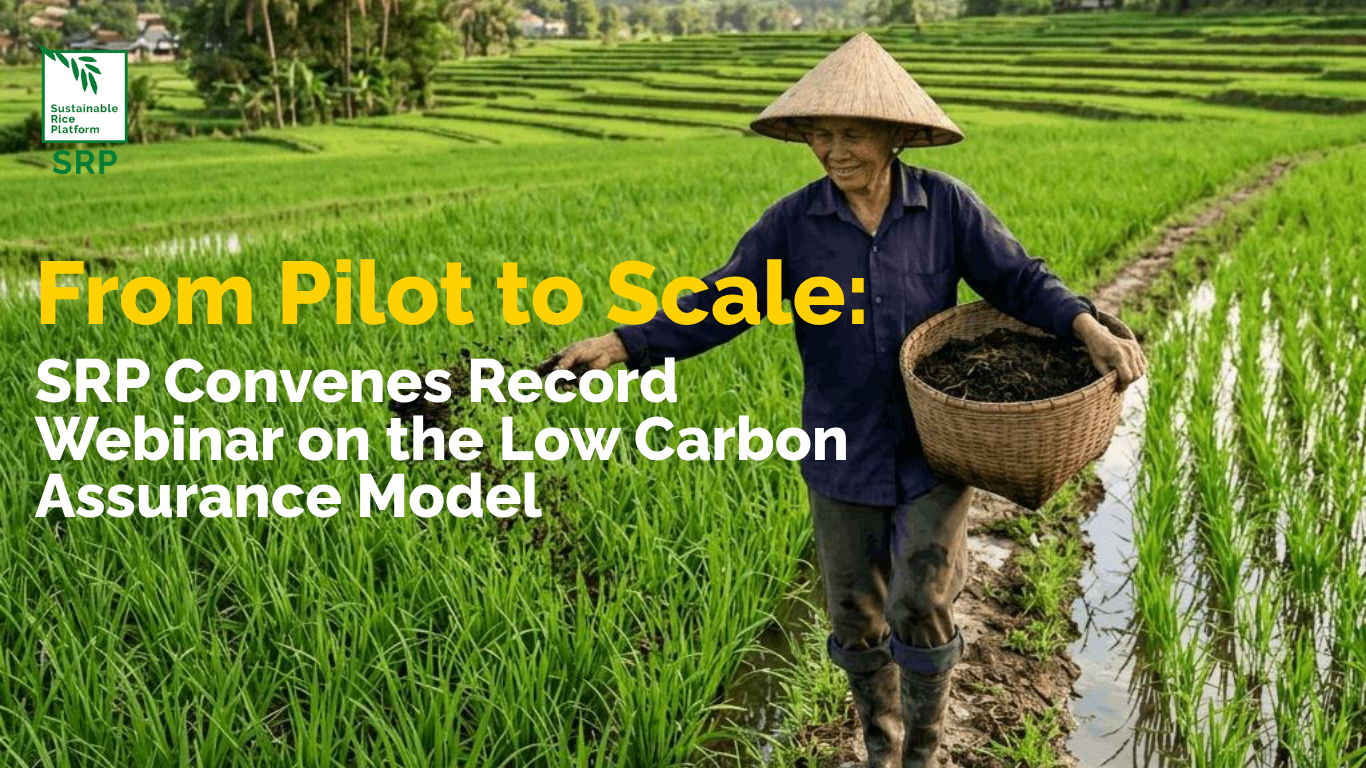
From Pilot to Scale: SRP Convenes Record Webinar on the Low Carbon Assurance Model
Nearly 300 registrants of this webinar, the Value Change Initiative and private-sector buyers to shape the pathway from LCAM's India and Vietnam pilots to sector-wide implementation BANGKOK, 2 September 2026 — The Sustainable Rice Platform (SRP) today convened one of
Read More
Meet the Speakers: From Pilot to Scale – Shaping the Future of L-CAM | SRP Webinar, 2 September 2026
For a solution to matter at scale, it has to survive contact with the real world — different geographies, different value chains, different buyers asking different questions. That's exactly the stage SRP's Low-Carbon Assurance Module
Read More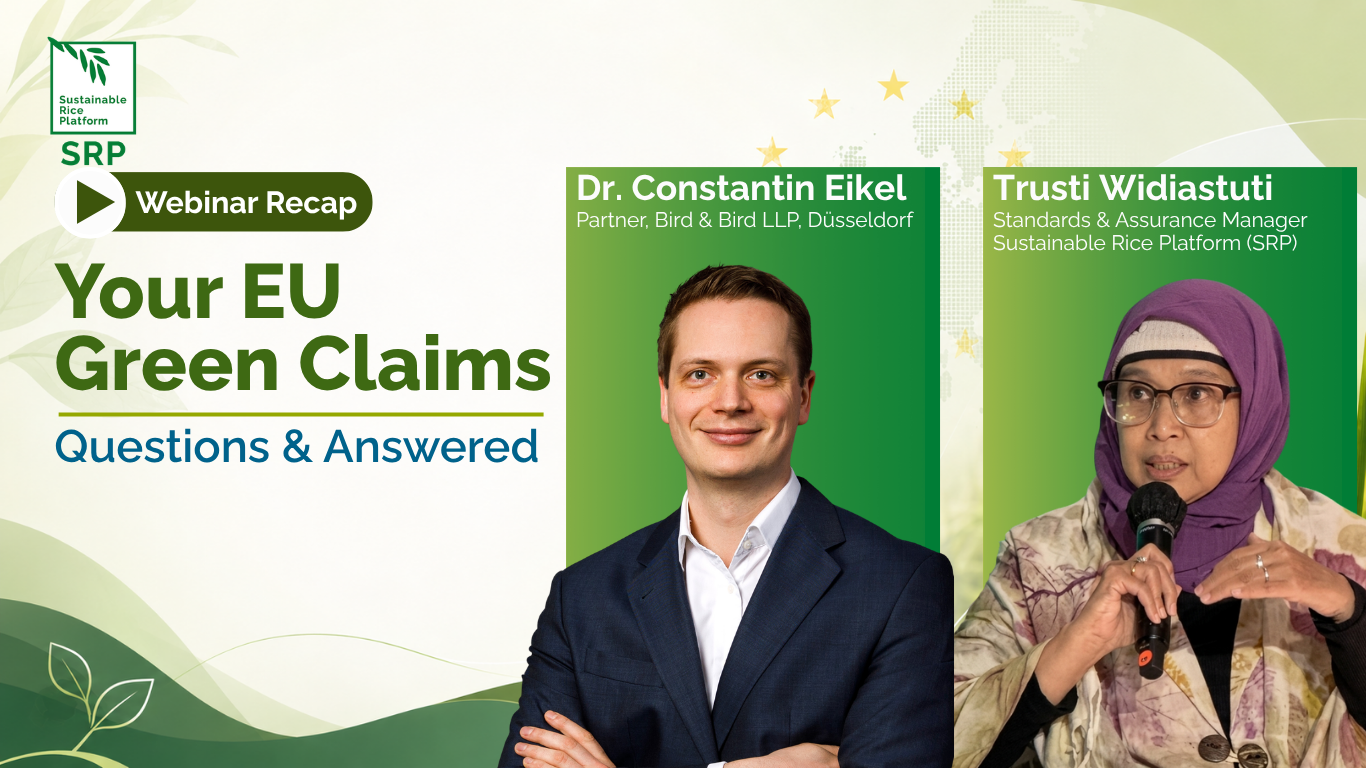
SRP Webinar Recap: Your EU Green Claims Questions, Answered
On 20 August 2026, the Sustainable Rice Platform (SRP) hosted a webinar on the EU Empowering Consumers for the Green Transition (EmpCo) Directive and what it means for sustainability claims in the rice sector. Moderated
Read More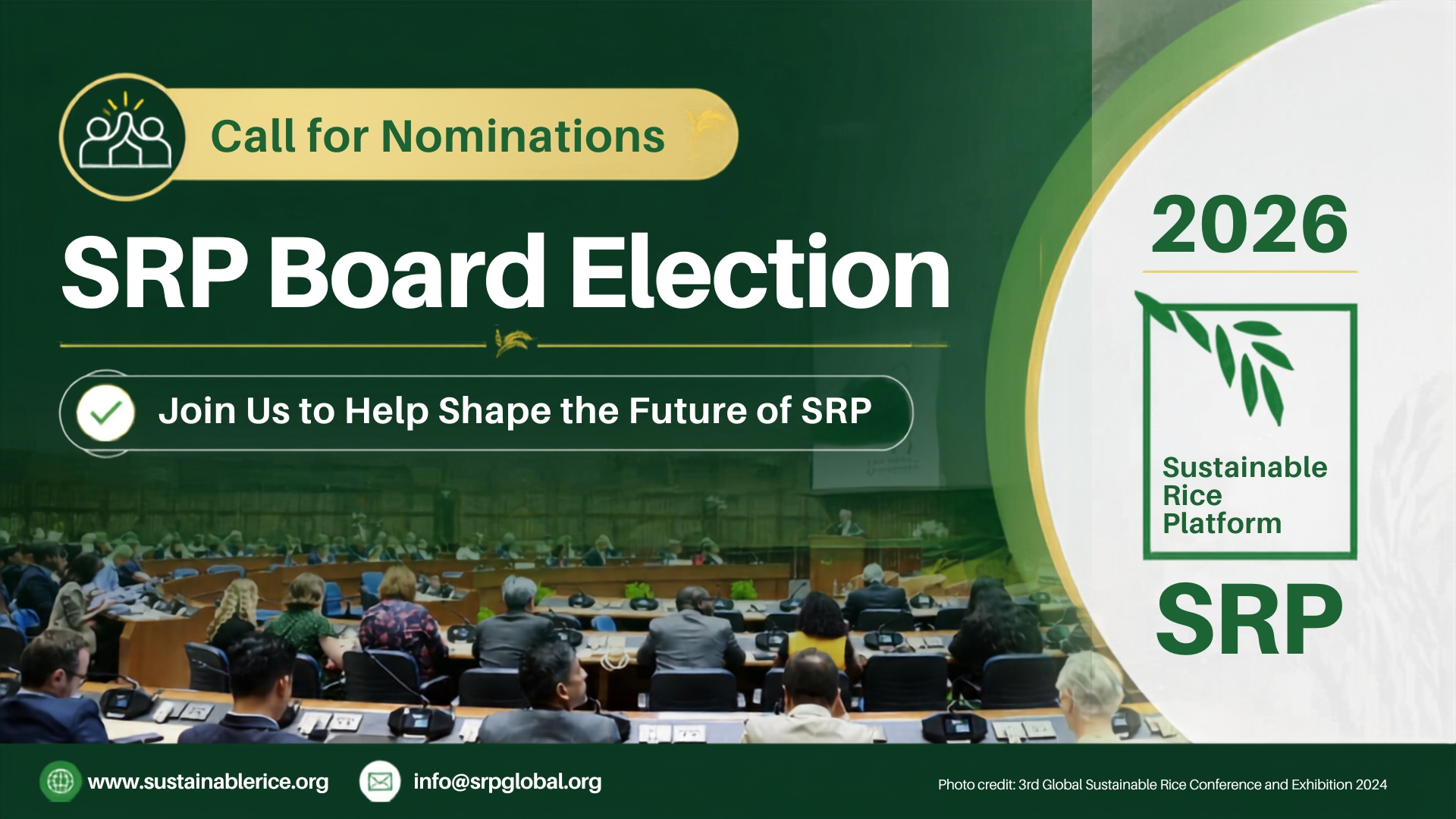
Call for Nominations: SRP Board Election — One Seat, One Vote, Your Voice
Nominations open 20 August 2026 This is your moment to help steer the future of the Sustainable Rice Platform. One seat on the SRP Board — At Large — is opening up. Unlike seats reserved
Read More
How SRP prepared for the EU Empowering Consumers for the Green Transition Directive
The EU Empowering Consumers for the Green Transition (EmpCo) Directive (Directive (EU) 2024/825) introduces new requirements to improve the transparency and credibility of environmental claims and sustainability labels, helping consumers make better-informed purchasing decisions. SRP is committed
Read More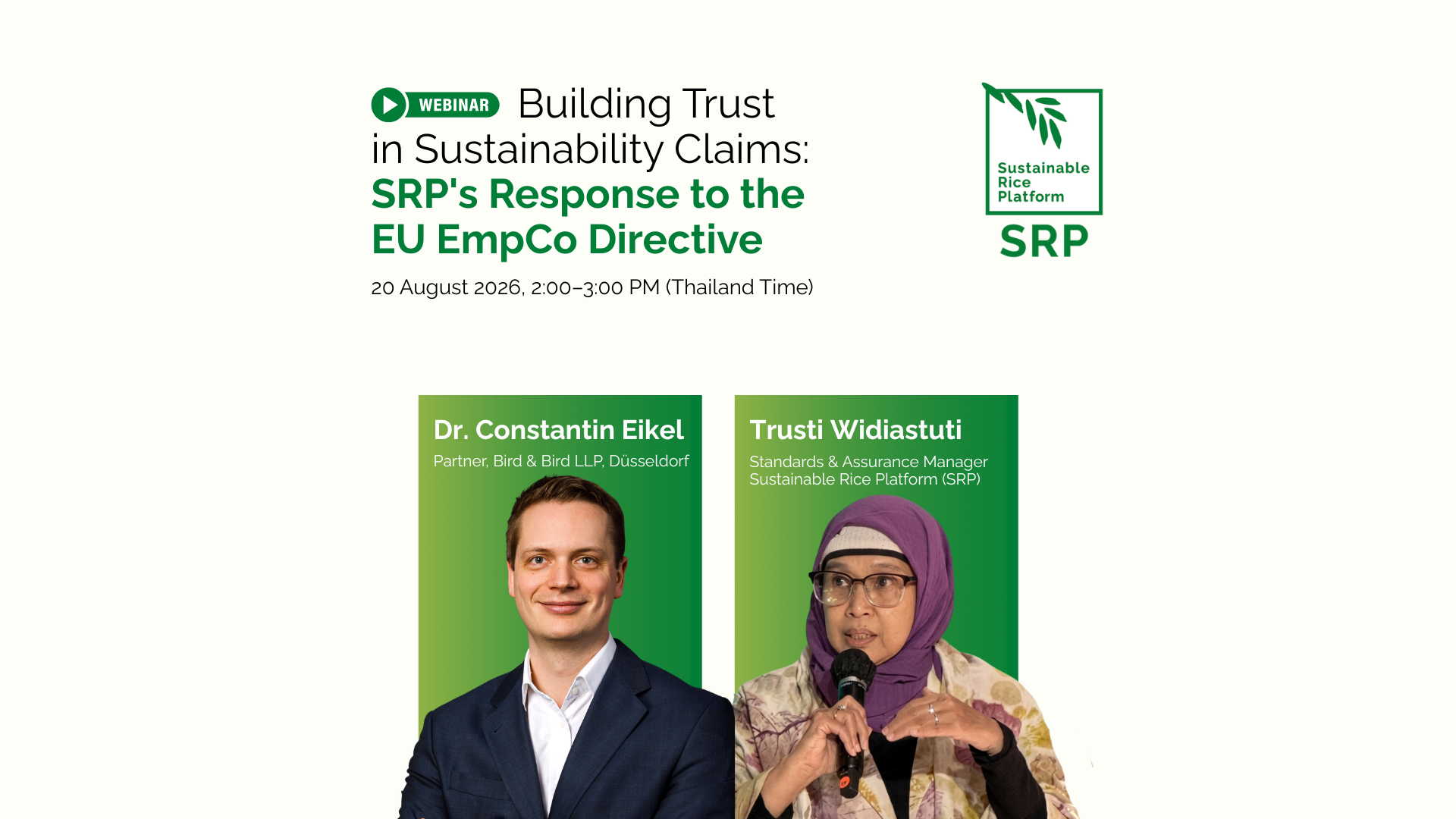
Meet the Speakers: Building Trust in Sustainability Claims: SRP’s Response to the EU EmpCo Directive | SRP Webinar, 20 August 2026
Starting 27 September 2026, the EU's EmpCo Directive comes into force — and it will fundamentally change how brands can talk about sustainability. Broad, unverified claims like "eco-friendly" or "green" won't hold up anymore unless
Read More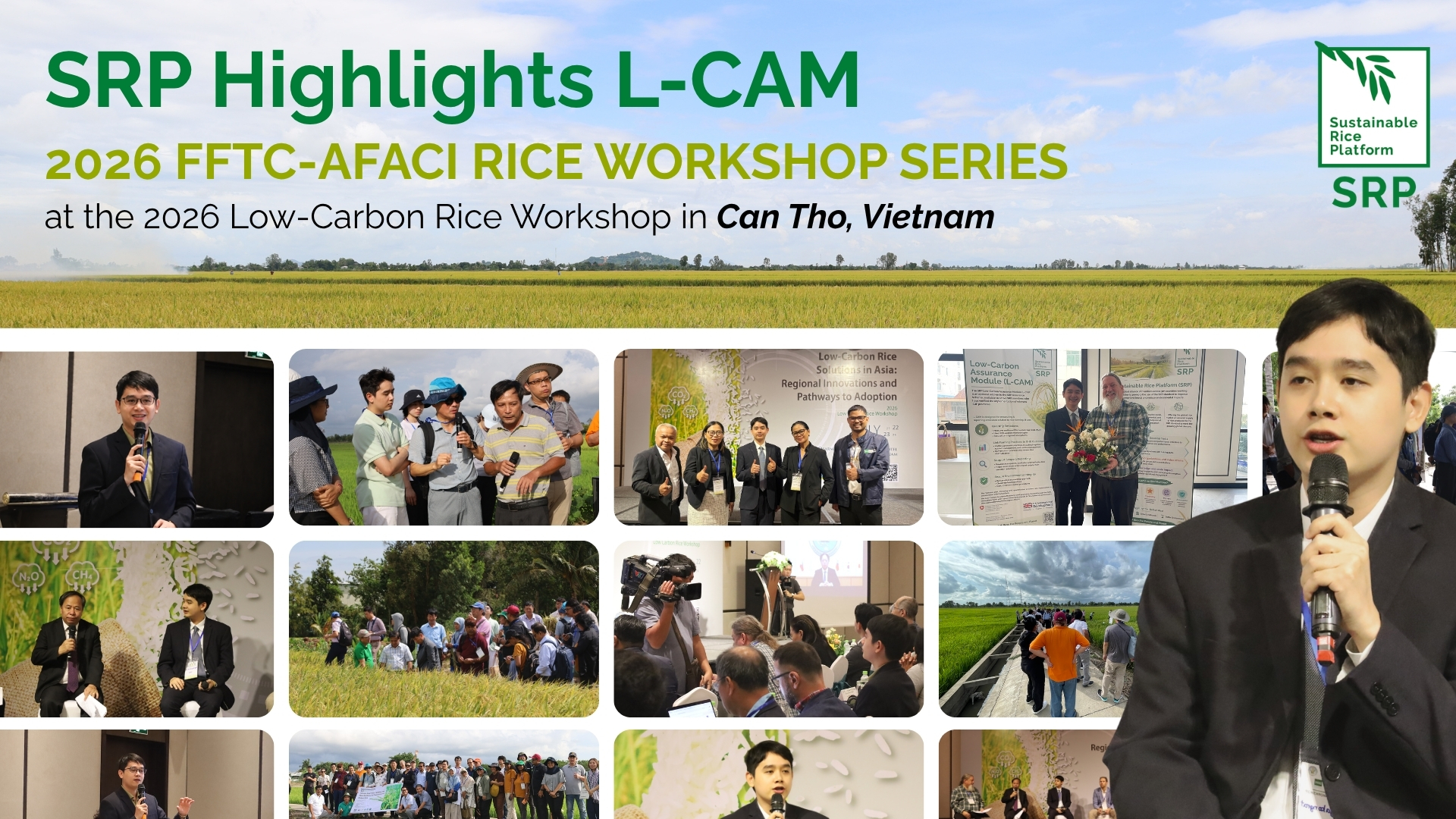
SRP Highlights L-CAM: 2026 FFTC-AFACI RICE WORKSHOP SERIES at the 2026 Low-Carbon Rice Workshop in Can Tho, Vietnam
From 22 to 24 July 2026, the rice world turned its attention to Can Tho City, Vietnam, for the FFTC workshop "Low-Carbon Rice Solutions in Asia." For the Sustainable Rice Platform (SRP), it was more than a
Read More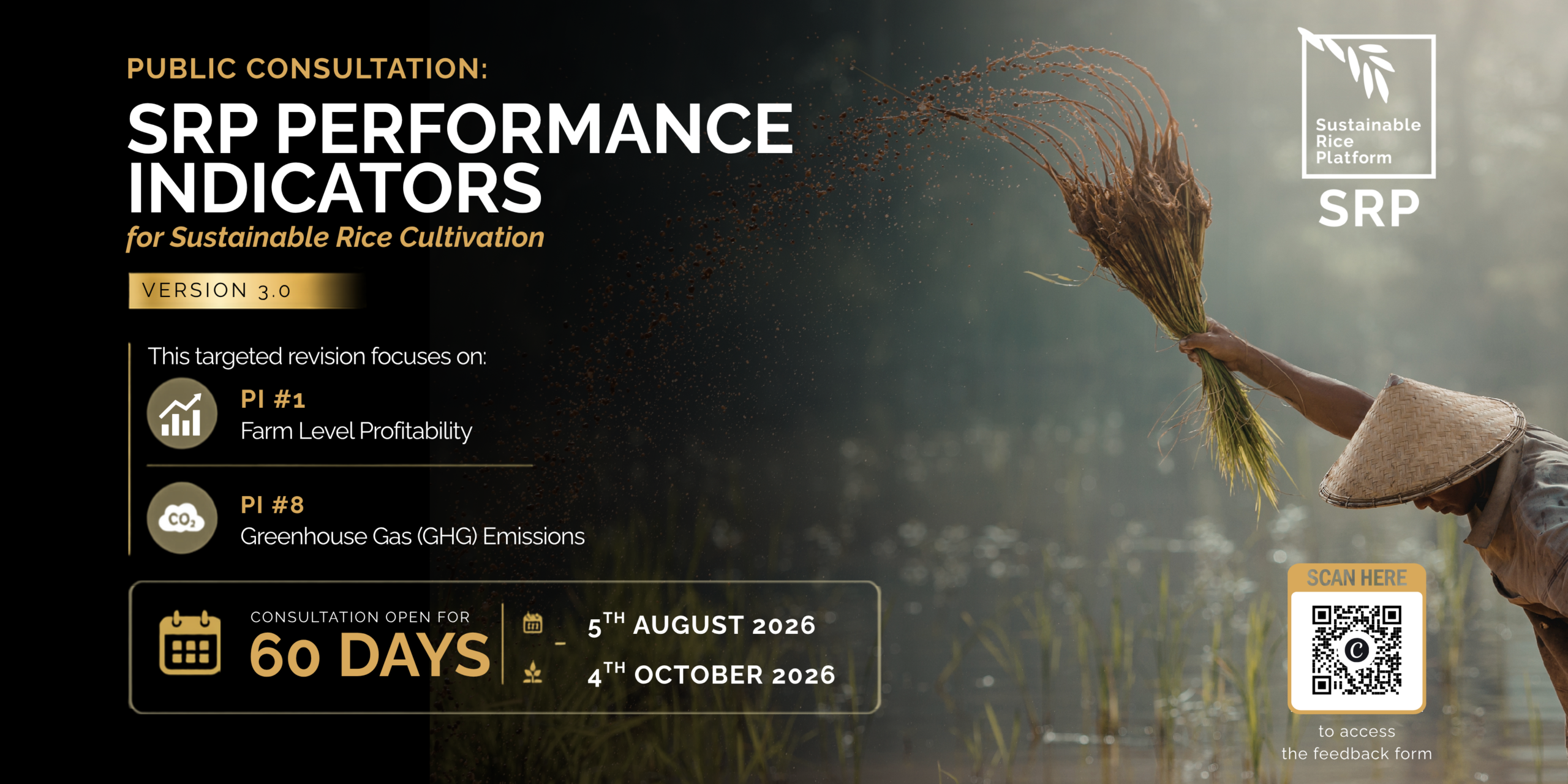
Public Consultation Open: Revision of SRP Performance Indicators for Sustainable Rice Cultivation
The Sustainable Rice Platform (SRP) invites stakeholders to participate in a 60-day public consultation on the proposed revision of the SRP Performance Indicators for Sustainable Rice Cultivation. The SRP Performance Indicators support the measurement of sustainability outcomes associated with rice cultivation and
Read More
Join Thai Webinar: Upgrade Thai Rice Production to meet an international market
As sustainability expectations continue to reshape global agricultural markets, the rice sector is entering a new era where transparency, traceability, and credible sustainability practices are becoming essential. To support stakeholders in navigating this transition, the
Read More