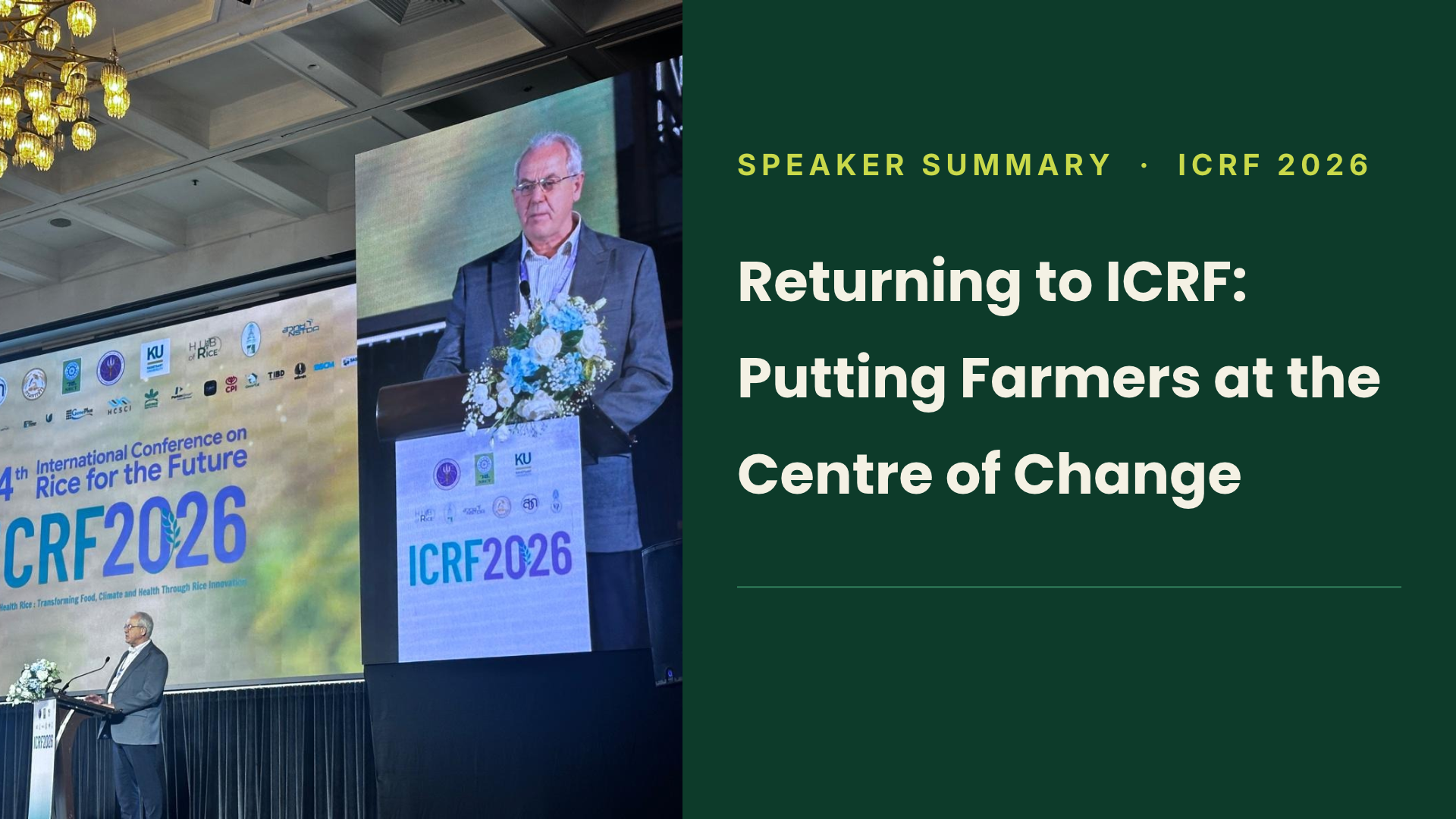
Returning to ICRF: Putting Farmers at the Centre of Change
Reflections from the 4th International Conference on Rice for the Future 2026, Bangkok, Thailand
There is something special about returning to an event you attended the year before, only to find yourself taking on a different role the next time around.
Last year, I had the opportunity to attend the International Conference on Rice for the Future (ICRF), where I saw people from different backgrounds, organisations and countries come together around a shared interest in the future of rice. It was encouraging to see so many perspectives represented in one place, from researchers and policymakers to industry representatives, development organisations and people working directly with farmers.
This year, I returned to the 4th International Conference on Rice for the Future (ICRF 2026), held on 23–24 November 2026 in Bangkok, but with a different responsibility: serving as part of the coordination team.
It has been a rewarding experience to see the event from another perspective, not only helping bring people together but also having the opportunity to see the Sustainable Rice Platform (SRP) contribute to the conversations shaping the future of the rice sector.
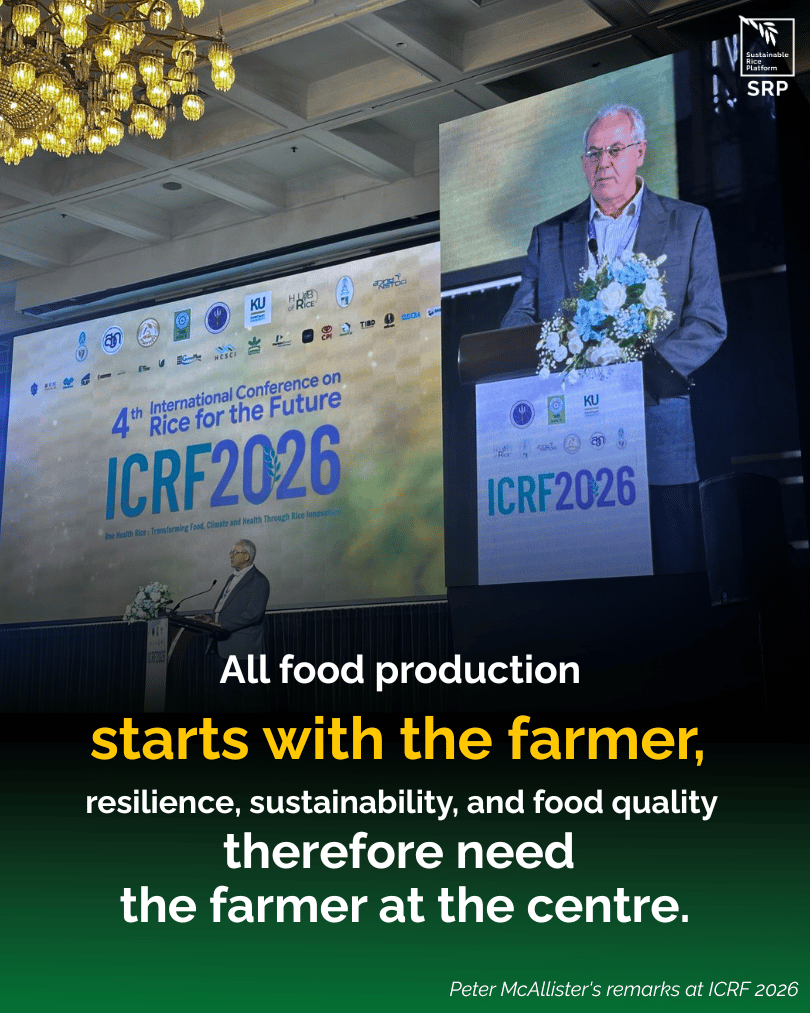
One of the highlights for me was seeing Peter McAllister, Executive Director of SRP, take the stage to share practical lessons from SRP’s experience working with farmers and stakeholders across different rice-producing countries.
His presentation, titled “Putting the Farmer at the Centre of Change: Challenges and Lessons Learned from Sustainable Rice Production”, addressed a question that I believe deserves more attention whenever we talk about transforming agriculture: Are we designing solutions around the people who are expected to put them into practice?
Beyond changing agricultural practices, we need to change how we engage with farmers
Rice is more than a food crop. It supports the livelihoods of hundreds of millions of people, contributes to food security and plays an important role in the economies and cultures of many countries.
At the same time, the rice sector faces increasingly complex challenges, from climate change and water scarcity to greenhouse gas emissions, changing market expectations and the need for better production efficiency.
There is no shortage of policies, technologies, research and initiatives aimed at addressing these challenges. However, as Peter highlighted in his presentation, having the right solutions does not necessarily mean that people will adopt them.
Ultimately, farmers are the ones making decisions on the ground. They are the ones investing their money, managing their resources, responding to unpredictable weather and taking risks every growing season.
Peter encouraged the audience to look beyond the conventional perception of farmers as beneficiaries of development projects and instead recognise them as active partners and agents of change.
He highlighted three important messages:
We need to consider farmers as agents of change, not simply beneficiaries.
We need to start where farmers are, rather than impose our own expectations on them.
We need to align our interests with those of farmers if we want effective and sustainable engagement.
These messages formed the foundation of his presentation, which explored why understanding farmers’ circumstances, aspirations and perceived risks is just as important as introducing new technologies or promoting better agricultural practices.
Three messages from Peter McAllister
Throughout his presentation, Peter shared several insights from SRP’s experience. Three messages particularly stood out and offer a useful perspective on how we can approach the future of rice production.
1. All food production starts with the farmer
“All food production starts with the farmer. Resilience, sustainability, and food quality therefore need the farmer at the centre.”
This is perhaps the most fundamental starting point for any discussion about transforming food systems.
We often talk about resilience, sustainability, food quality and environmental performance as separate objectives. Yet, all of them are closely connected to the people who actually produce our food.
Farmers are not simply producers. They are micro-entrepreneurs, risk takers, environmental stewards, climate managers and members of their communities. They must constantly balance production costs, labour, market prices, weather conditions and the wellbeing of their families.
For many smallholder farmers, adopting a new practice is not simply a technical decision. It can mean investing additional money, changing familiar routines or accepting uncertainty about the next harvest.
As Peter explained, even when a particular practice has been scientifically proven to deliver better results, farmers may still perceive risks in changing what they have been doing for years.
This is why putting farmers at the centre must go beyond acknowledging their importance. It means understanding their realities, listening to their aspirations and ensuring that the changes we promote can bring tangible benefits to them.
2. Farmers must be at the centre of the discussion for change
“Farmers are micro-entrepreneurs, risk takers, environmental stewards, climate managers and community members. We cannot achieve our goals without putting them at the centre of the discussion for change.”
One of the interesting points in Peter’s presentation was the difference between institutional objectives and farmers’ own priorities.
Governments, businesses and development organisations may have legitimate reasons for initiating agricultural projects. These might include improving water management, reducing greenhouse gas emissions, increasing export earnings or improving rice quality.
However, these objectives do not automatically translate into farmers’ priorities.
For farmers, making a reasonable return on their investment, covering production costs and securing their livelihoods may be the immediate concerns. If an initiative does not take these considerations into account, even a well-designed project may struggle to achieve meaningful adoption.
Peter therefore emphasised the importance of building trust, understanding local circumstances and aligning project objectives with farmers’ aspirations.
He also highlighted several practical considerations: sharing the risks associated with changing practices, allowing farmers enough time to adapt, providing effective feedback and encouraging peer-to-peer learning.
Sometimes, seeing another farmer successfully adopt a new practice and experience the benefits firsthand can be more convincing than any presentation or technical recommendation.
This is an important reminder that sustainable change is not only about what we introduce, but also about how we work with the people expected to make that change happen.
3. SRP simplifies the complex
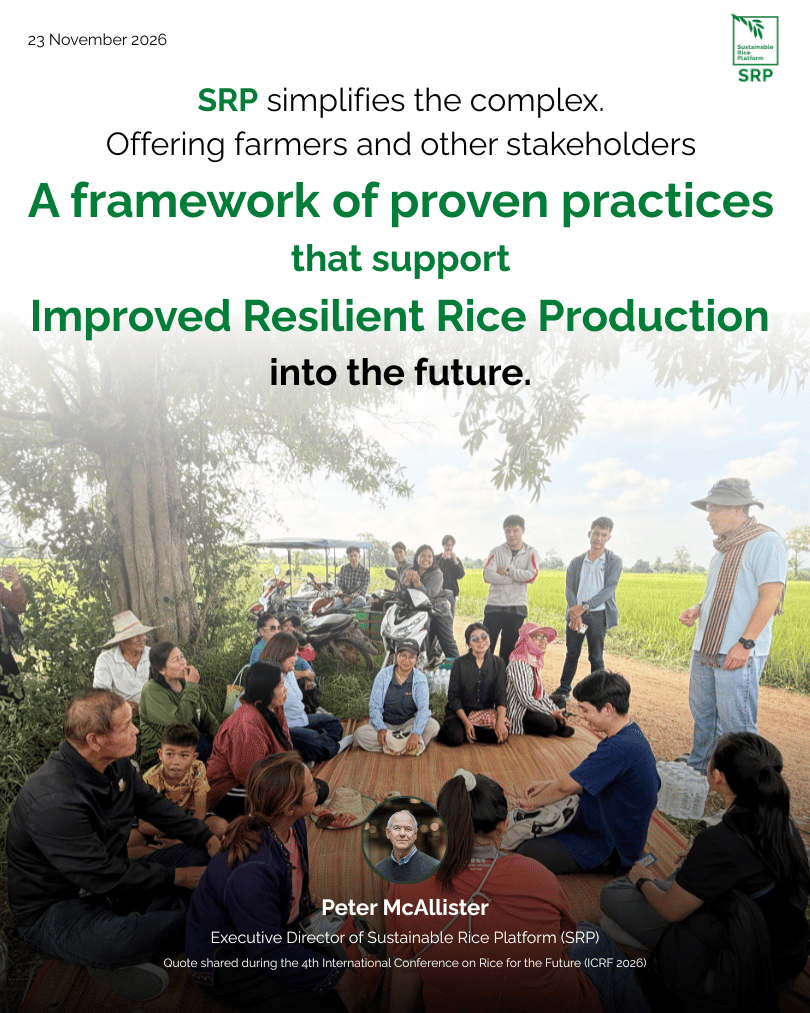
“SRP simplifies the complex, offering farmers and other stakeholders a framework of proven practices that support improved resilient rice production into the future.”
So, how can we translate these principles into practical action?
This is where the Sustainable Rice Platform comes in.
SRP is a multi-stakeholder partnership bringing together the private sector, research institutions, international organisations and civil society to advance sustainable rice production.
At the heart of its work is the SRP Standard for Sustainable Rice Cultivation, which provides a framework of proven good practices covering different aspects of rice production.
These include farm management, water use, nutrient management, pest management, harvesting and post-harvesting practices, labour rights, and occupational health and safety.
The objective is to make better agricultural practices more accessible and applicable across different farming systems and geographical contexts.
Importantly, these practices are not relevant only to large commercial operations or farmers producing for international markets. They can also benefit smallholder farmers supplying domestic and regional markets.
Through the experience of its members, SRP has seen how implementing the Standard can contribute to both environmental and economic outcomes.
Peter shared two examples during his presentation.
In a project involving approximately 1,400 farmers in Pakistan, participating farmers recorded an average 13% increase in yields and a 39% increase in income compared with a control group. The project also contributed to climate objectives and improvements in local biodiversity.
Closer to home, a GIZ–OLAM project in Thailand recorded a 20% increase in farmer income alongside a 21% reduction in greenhouse gas emissions.
Of course, results will vary depending on the location, farming system and existing practices. Nevertheless, these examples demonstrate that environmental objectives and improved farmer livelihoods do not have to compete with one another.
With the right approach, they can reinforce each other.
From the conference stage to conversations with farmers
Beyond the presentations and discussions in the conference rooms, I believe one of the most important aspects of this work is ensuring that conversations about the future of rice reach the people who are directly involved in producing it.
Alongside SRP’s participation at ICRF 2026, the SRP team also had the opportunity to engage directly with farmers participating in a project led by Khon Kaen University (KKU), as part of the Mars Ambassador Program.
These interactions offer an important perspective on the issues discussed at the conference.
While international conferences provide opportunities to exchange research, discuss policies and explore new partnerships, conversations with farmers help us better understand what these ideas mean in practice.
What challenges do farmers encounter? What motivates them to change their practices? What support do they need? And how can different stakeholders work together to make the transition worthwhile for them?
These are questions that cannot be answered by technology or policy alone. They require continuous engagement, listening and collaboration.
For me, seeing these different aspects come together is what makes SRP’s work particularly meaningful: connecting the broader objectives of the rice sector with practical action at farm level.
Photo credit: Mars Ambassador Program. Photos feature the SRP team’s engagement with farmers participating in a Khon Kaen University (KKU) project.
Looking ahead: The future of rice starts with people
Returning to ICRF this year has been a valuable experience, both personally and professionally.
Last year, I attended as someone interested in learning from the many people working to shape the future of rice. This year, being involved in the coordination and seeing SRP contribute to the programme gave me a different appreciation of the work that goes into bringing people, ideas and organisations together.
It also reinforced something that I believe is easy to overlook when we talk about sustainable development: meaningful change requires more than having good intentions, strong policies or the latest technology. It requires understanding the people whose lives and livelihoods are directly affected by those changes.
Peter concluded his presentation with three important reminders: take the time to understand farmers and where they are coming from, build trust by demonstrating real benefits, and identify, support and manage the risks involved in changing practices.
As the conference brought together different perspectives on rice, food, climate and innovation, I was reminded that the future of this sector is not something that any single organisation or stakeholder can build alone.
It takes collaboration across the entire value chain, from farmers and researchers to governments, businesses and development partners.
And perhaps the most important place to start is not with what we want farmers to change, but with understanding what matters to them.
Because if we want to shape the future of rice, we must make sure that farmers are not simply part of the conversation. They must be at the centre of it.
Author Biography
Tun Boonyakongrat is a Senior Membership and Communications Officer at the Sustainable Rice Platform (SRP), where he works on membership engagement, strategic communications and stakeholder relations, connecting organisations and partners to advance sustainable rice production globally. He holds a Bachelor’s degree in Liberal Arts from Mahidol University.
Companies are under pressure to reduce emissions fast — and to explain their approach in a way that stands up to scrutiny from auditors, customers, investors, and regulators. Two terms come up constantly: insetting and
Assignment Details PositionTechnical Specialist – Rice Value ChainContract TypeConsultancyLocationSoutheast Asia preferredFocus CountriesBangladesh and Cambodia, with potential activities in Viet NamApplication Deadline15 November 2026 1. Background The Sustainable Rice Platform (SRP) is seeking experienced consultants to
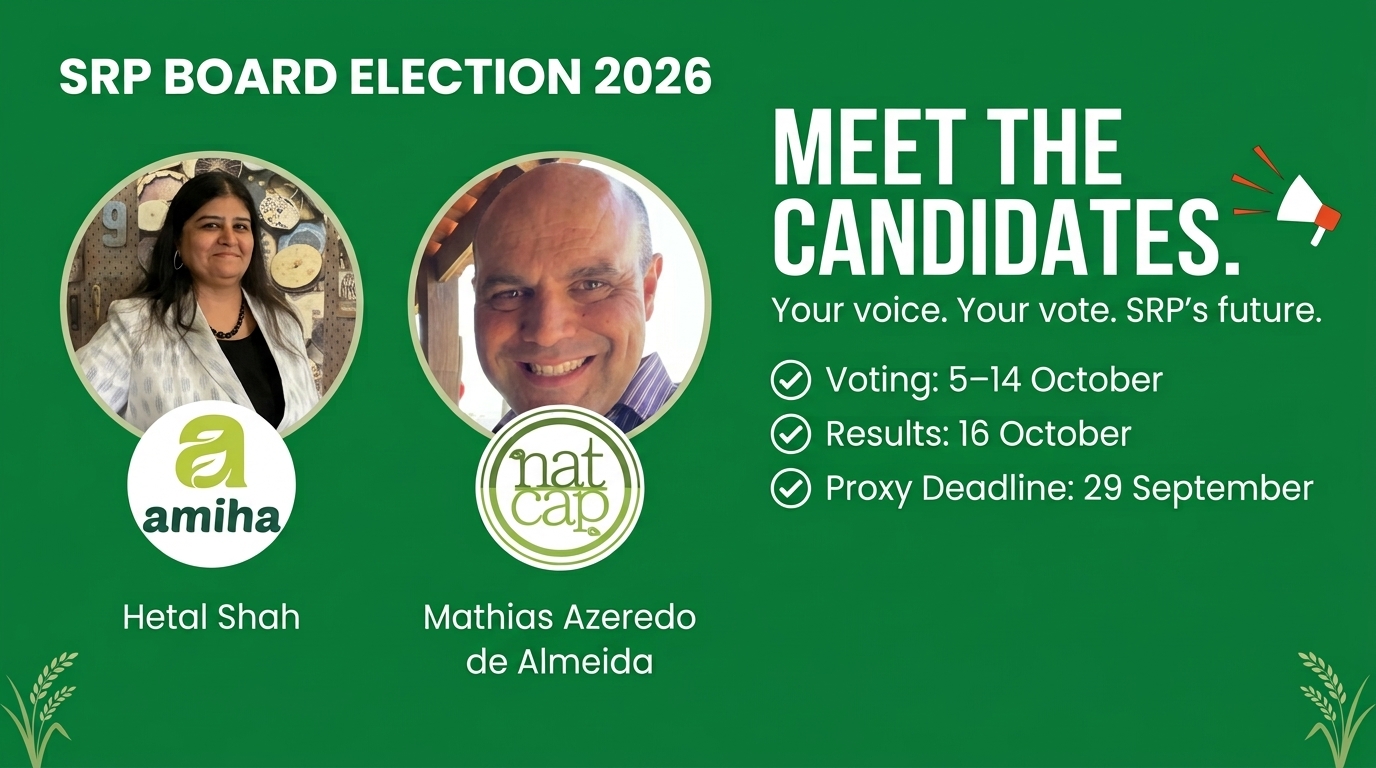
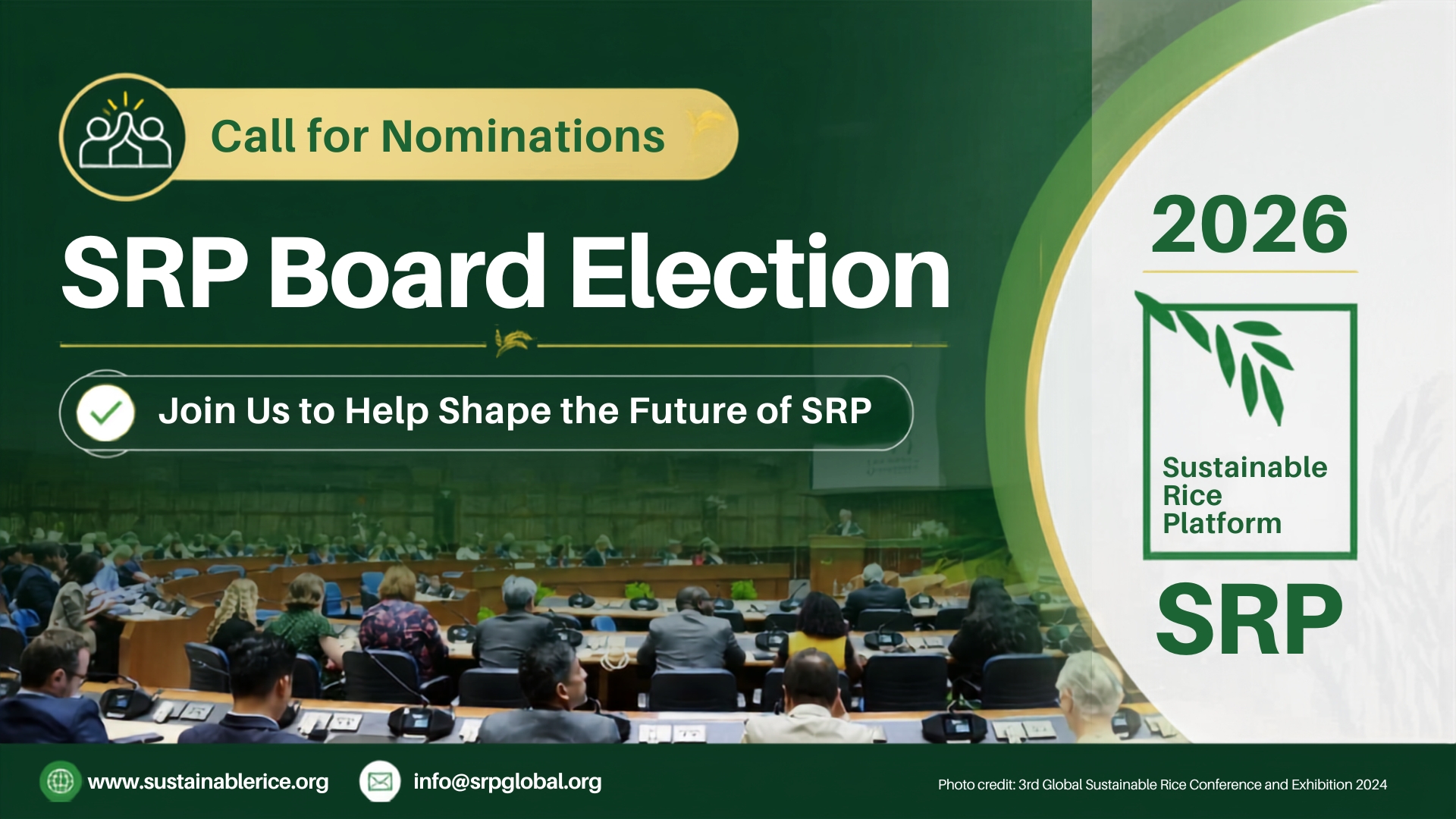
The SRP Board sets the direction for our entire movement — and this year, one seat, two exceptional leaders, and every member's vote will decide who helps steward that future. This is your moment to
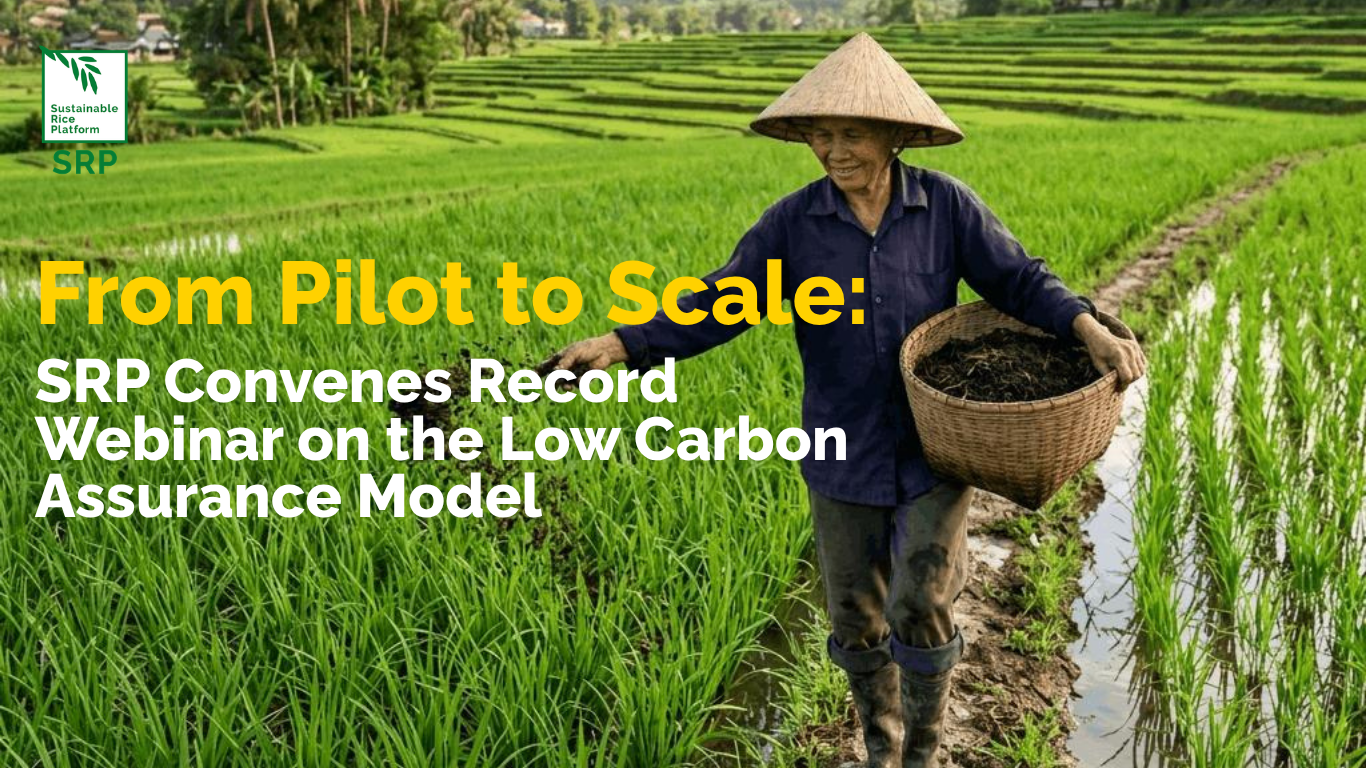
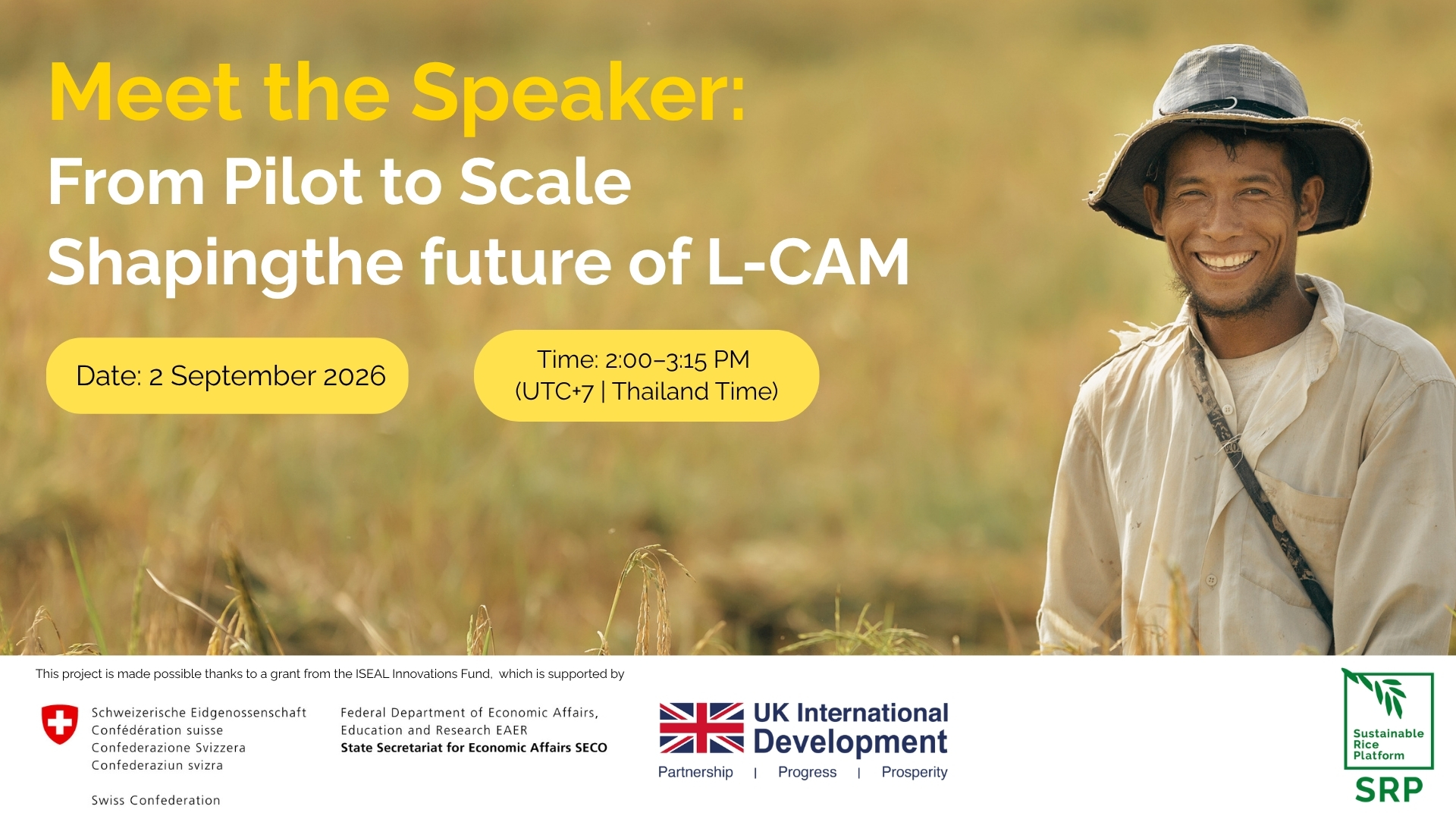
Nearly 300 registrants of this webinar, the Value Change Initiative and private-sector buyers to shape the pathway from LCAM's India and Vietnam pilots to sector-wide implementation BANGKOK, 2 September 2026 — The Sustainable Rice Platform (SRP) today convened one of
For a solution to matter at scale, it has to survive contact with the real world — different geographies, different value chains, different buyers asking different questions. That's exactly the stage SRP's Low-Carbon Assurance Module
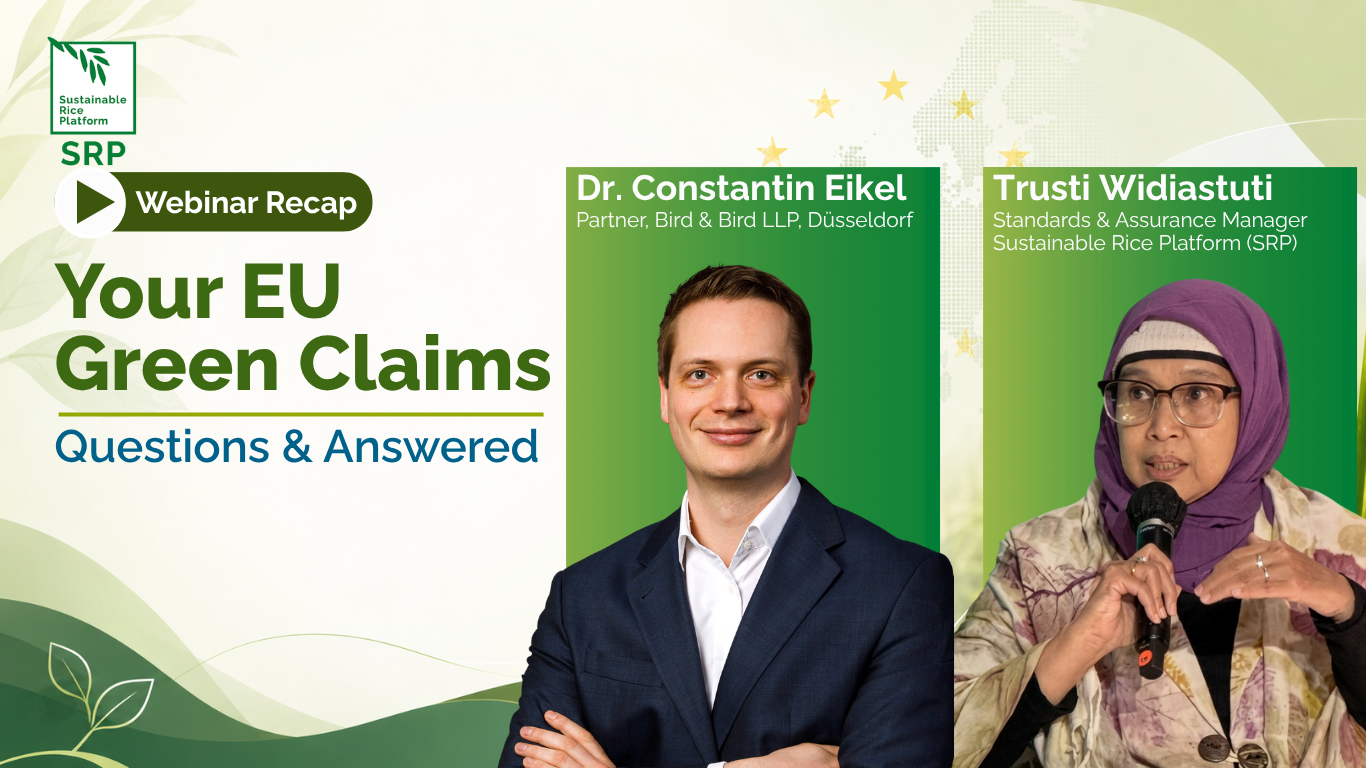
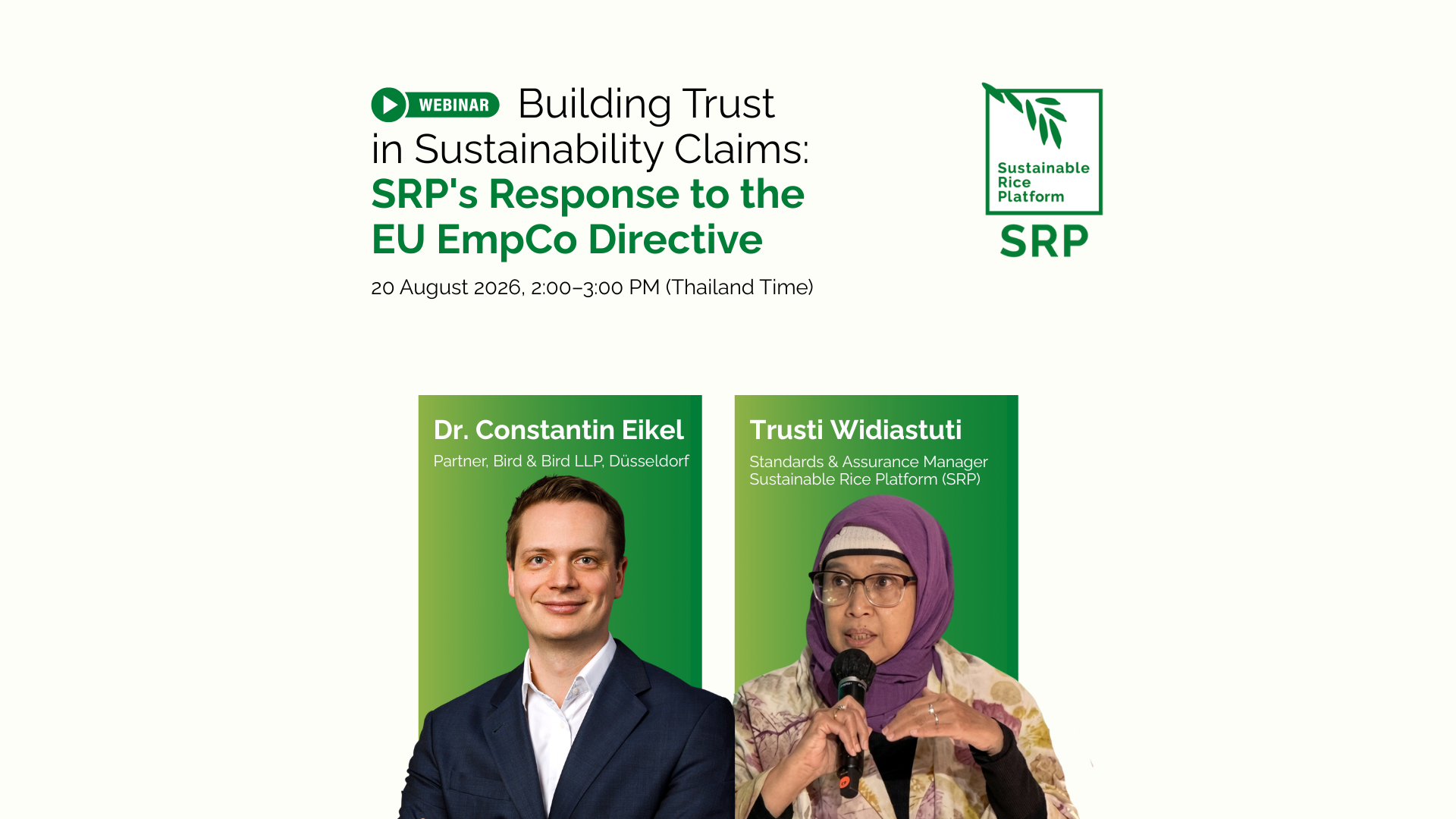
On 20 August 2026, the Sustainable Rice Platform (SRP) hosted a webinar on the EU Empowering Consumers for the Green Transition (EmpCo) Directive and what it means for sustainability claims in the rice sector. Moderated
Nominations open 20 August 2026 This is your moment to help steer the future of the Sustainable Rice Platform. One seat on the SRP Board — At Large — is opening up. Unlike seats reserved
The EU Empowering Consumers for the Green Transition (EmpCo) Directive (Directive (EU) 2024/825) introduces new requirements to improve the transparency and credibility of environmental claims and sustainability labels, helping consumers make better-informed purchasing decisions. SRP is committed
Starting 27 September 2026, the EU's EmpCo Directive comes into force — and it will fundamentally change how brands can talk about sustainability. Broad, unverified claims like "eco-friendly" or "green" won't hold up anymore unless
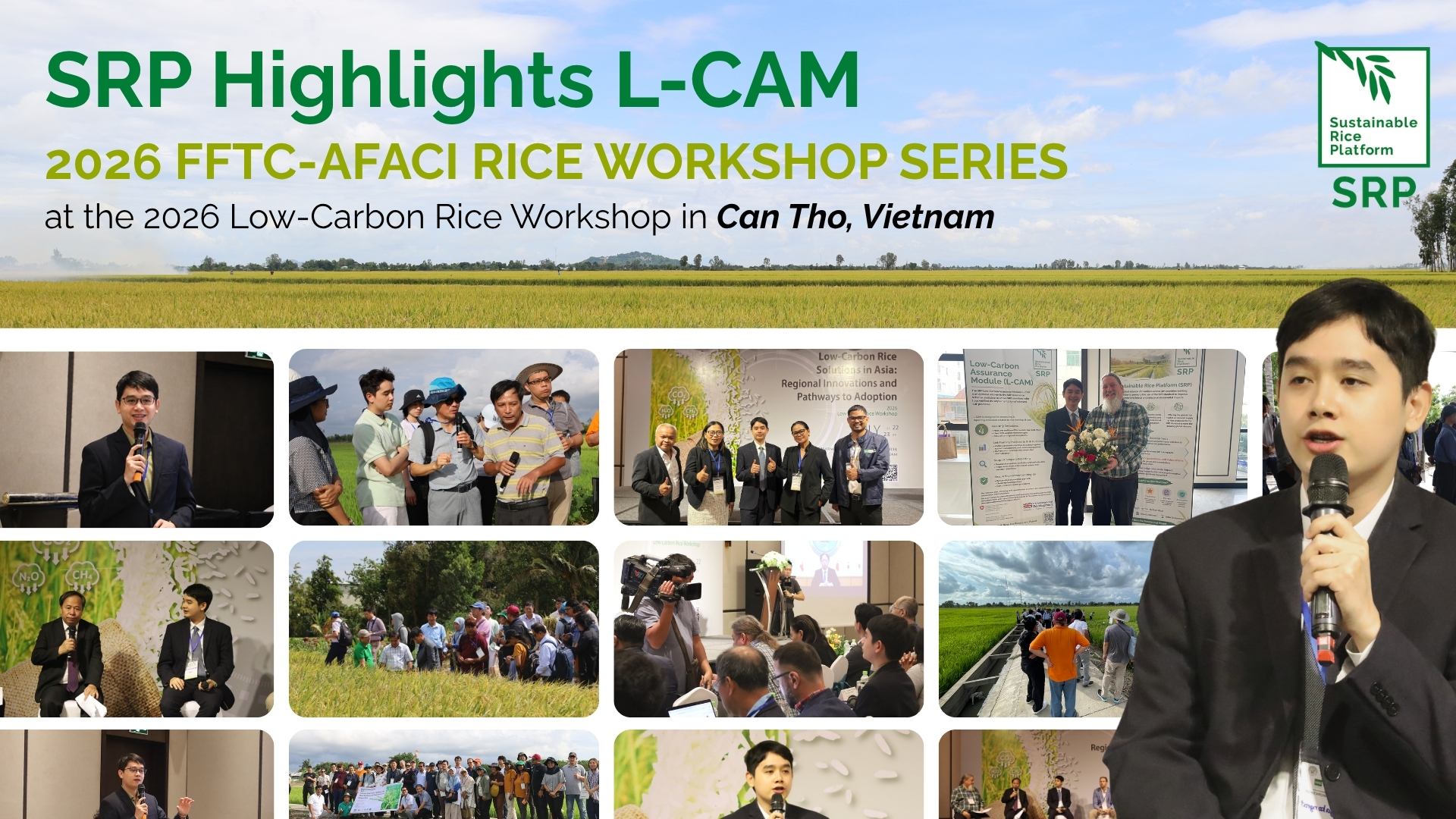
From 22 to 24 July 2026, the rice world turned its attention to Can Tho City, Vietnam, for the FFTC workshop "Low-Carbon Rice Solutions in Asia." For the Sustainable Rice Platform (SRP), it was more than a
Leave your details and our Membership Team will get in touch with you to discuss next steps. For more information about the SRP membership, please also read the SRP Membership Manual Programme.
Member login
If you don't have an account yet, please contact us at info@sustainablerice.org.